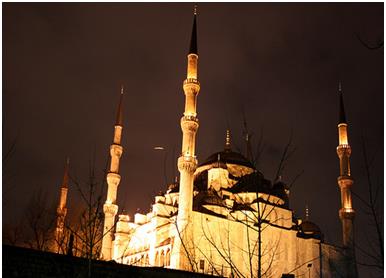
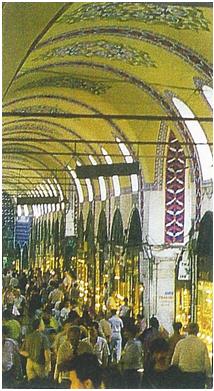
2 Families, intertwined, who saw the world differently

My first real memory of my grandparent’s home in Saint Louis Missouri, was traipsing down the basement stairs, slipping and sliding in my new patent leather shoes, at age 4. I was looking for, “Tommy the turtle” being the youngest grandchild we had at that time I had learned that he would allow me to tickle his neck.

This is the Frank Feuerbacher’s family.
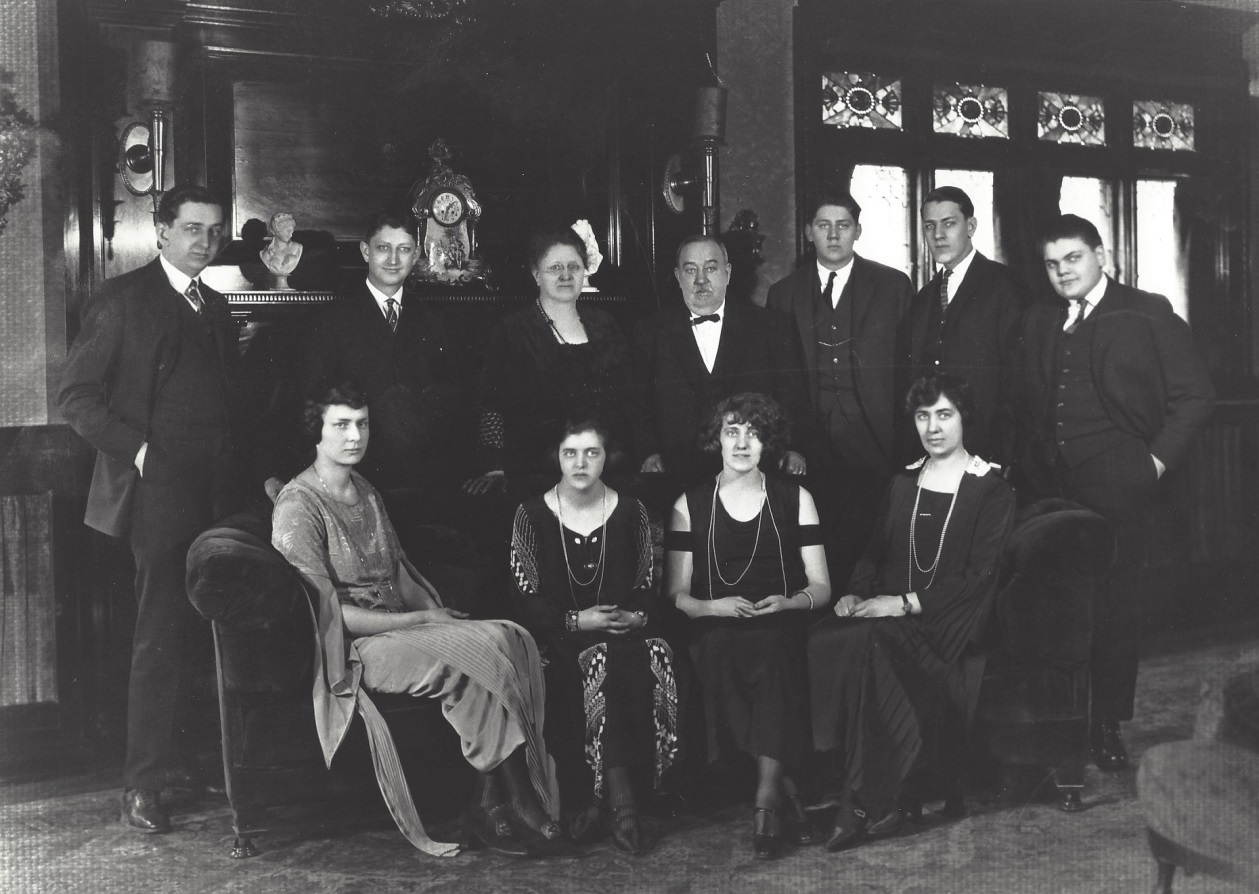
The backrow center is Frank and his wife, Caroline Feuerbacher. And in the front row, is my mother Caroline with all that curly( red) hair. Originally there were 12 children, 4 sons had died already from childhood diseases that today are curable.

The background of this photo is the fireplace—much loved by my two brothers and me for the many Christmases we drove from Toledo to St. Louis to celebrate.

We arrived the day before the holiday mainly because my parents knew that the living room would be, “boarded up” for three days for the help to decorate and wrap presents…. allowing my brothers and a few male cousins to cascade down to the basement for entertainment—fastening long strings to the pipes overhead and setting fire to time their burn factor for the Winner. (Tommy the Turtle never came out)

One or two of my female cousins would join me in the top floor ballroom and we would drive around on very old, old, wooden scooters—sometimes bumping into each other. (But not as bad as the guys.)

On Christmas Day, after the destruction of the gift wrap , the living room was a shamble of torn paper—and we adjoined to the dining room.

The dining room was used daily with seating of up to 25 people. Frequently we played hide-and-seek in the darkened  and unused room….  any older family member who walked by hearing the noises, would just keep on walking and ignore it.

The following picture is the backyard with all four of us Murray kids, (must have been Sunday because of our clothes). My brother Tom is facing me, my brother Franky holds the head of our baby sister Veronica and: All are pushing on the old fashion footrest to move the swing back and forth but really trying to kick each other in the ankles, and did…
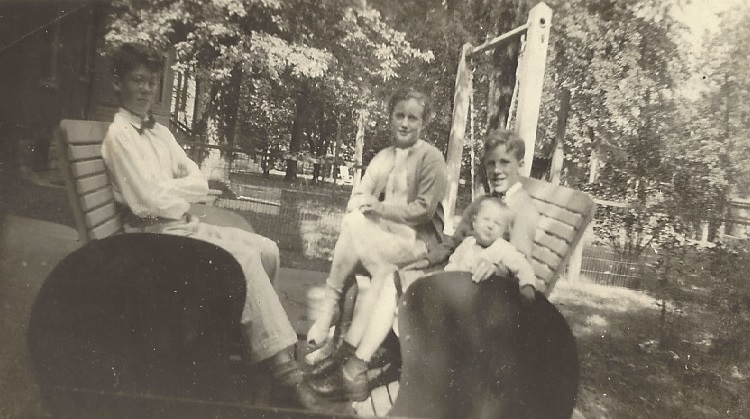
It was a large yard with a three car garage and a chauffeurs apartment. The marvelous garbage bin on one side faced the back alleyway for pick-up. The other side faced the yard and was used frequently by my brothers and several cousins during lengthy family visits… to shove each other in and sometimes did… (And did they smell at dinner!)

Since only four of grandfathers children married, producing three children in one family, two in another, and four in the Murray family. There were no more male decedents left as of two years ago.

The following picture is of Elizabeth Feuerbachers Ganss with her husband George and their three children: George Junior never married, his sister Betty in the picture is a Nun who survived the Church’s changes for the Nunneries, and daughter Carolyn who has five children.

Uncle Fred Feuerbacher had two children: Father Edward who became a Marvelous Parish Priest, and a daughter whom all are dead now.

And the end of the Frank Feuerbacher name and male legacy— but the female descendants carried on the family traditions.

Ohio to St. Luis is not a short drive but over the following years the Murray’s would make the trip or vice versa. Our maturation was quite different from out St. Luis cousins-vice verse- but we continued to meet and loved it.

The following three pictures might explain the differences.

The Feuerbachers had a “river house” and in this first picture you can even see a little bit of the river on the left. Immediately after the photograph both my brothers and I ran into the house to get our swim suits. And we went screaming down for the rope that out dad had helped us tie on a tree above the water. And one at a time leaped onto the rope and off into the river! All the other kids were forbidden- except Georgie (on my right side) he came running after- in his underwear!
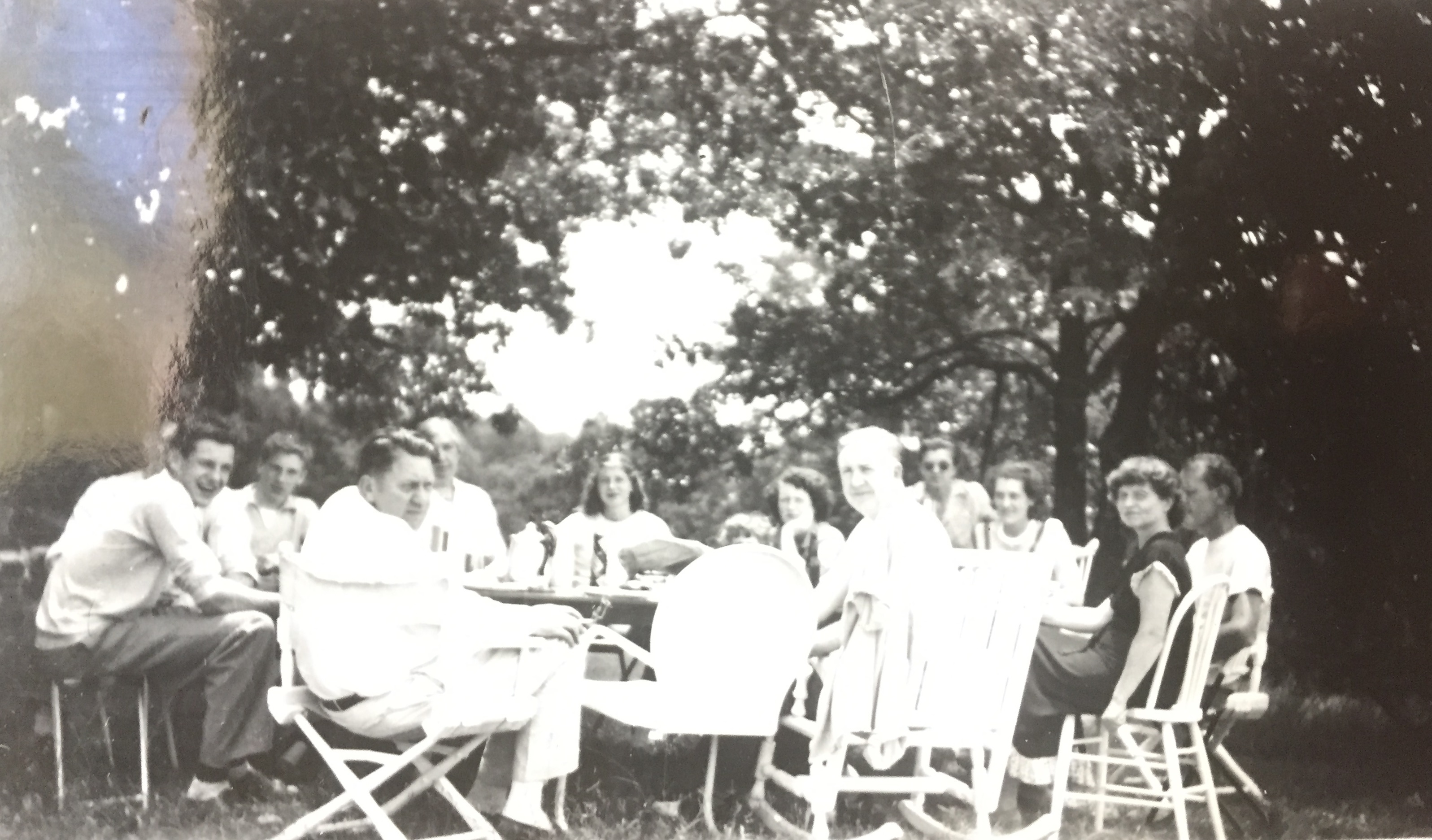
Picture number 2 is a typical picnic planned by the Feuerbachers. All adults sitting in chairs with plates and silverware- and no children.

This was a picture of the grandchildren at grandpa’s house in St. Louis. All nicely dressed and controlled by two overseers- eating off of china plates. And using silverware and nary a smile in place.

All Murray children could swim by the time they could walk and also climb ropes and much much more. On our summer trips to grandpa Murray’s home our aunt Mary and avid swimmer would take the three of us Murray kids: Tom, Franky, and me out for canoe rides. The only condition was when we were close to the shore we would swim in- and dash loved it. The only repayment was to help pull the canoe ashore.
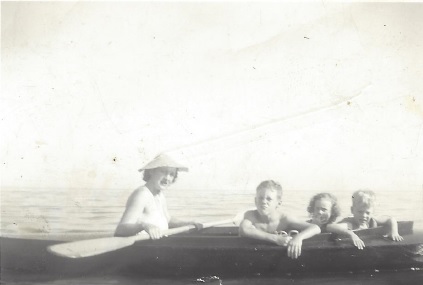
Now to include grandpa Murray’s family home in Bridgeport, Connecticut.

A very large house with four floors, including the reference/reading room at the very top- with an ocean view.

It was set in a large yard, frontal view of the Long Island Sound and two huge cannons facing the water. They were wonderful to climb up and down, and get pushed off of too. Originally they were built for defense against attacks along the Long Island Sound- but the attacks never came.

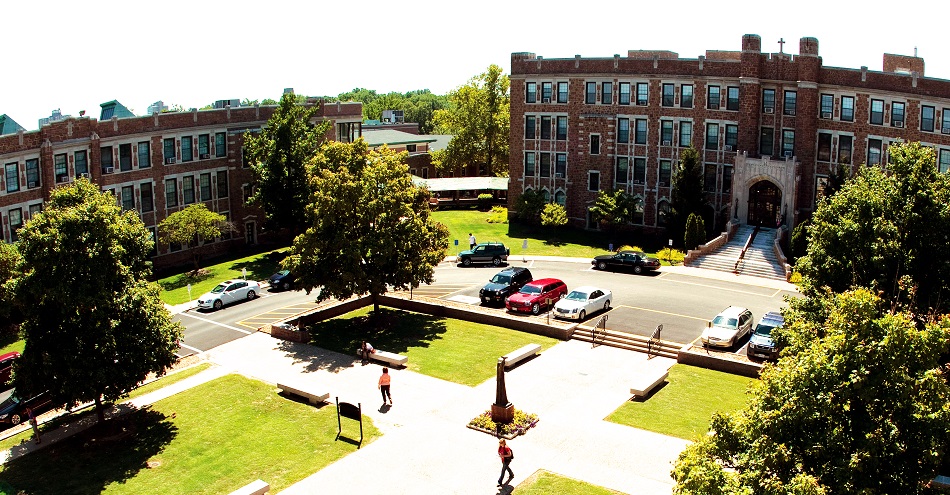
The circled part of the picture is the original house being smothered by the new campus buildings. So what did grandpa Murray do? He willed it to them after he died at the highest possible price.

Two Families, intertwined, who saw the world differently, and as they aged discovered the differences.
Posted in America | 1 Comment

Bournemouth: Staging for WW II

London


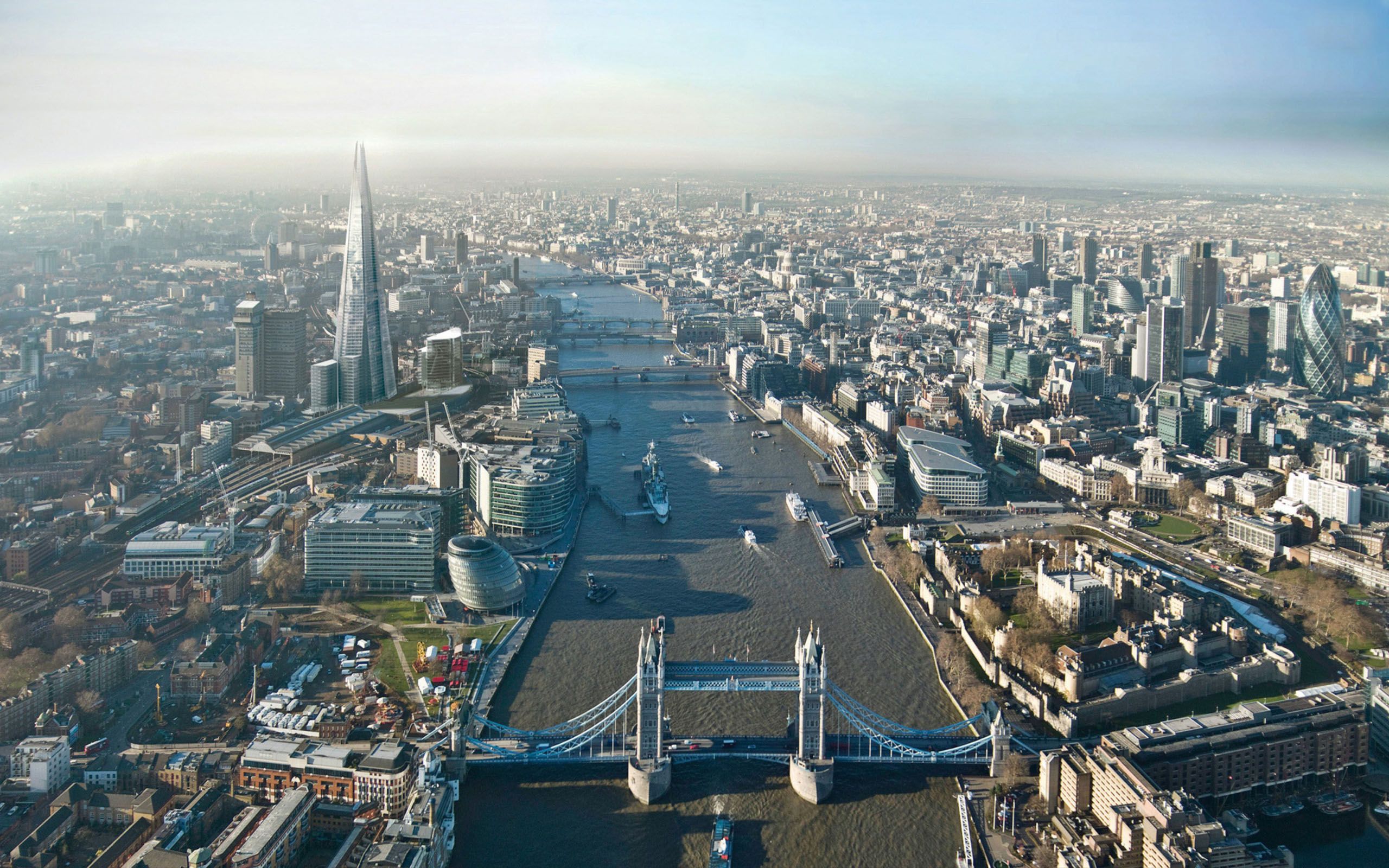
This picture shows London as we left it.  We crossed the 2nd  bridge (straight ahead) and it gives an overview of how far you had to drive to leave this marvelous city. Now for the relaxing influence of the rolling hills and the English Channel.

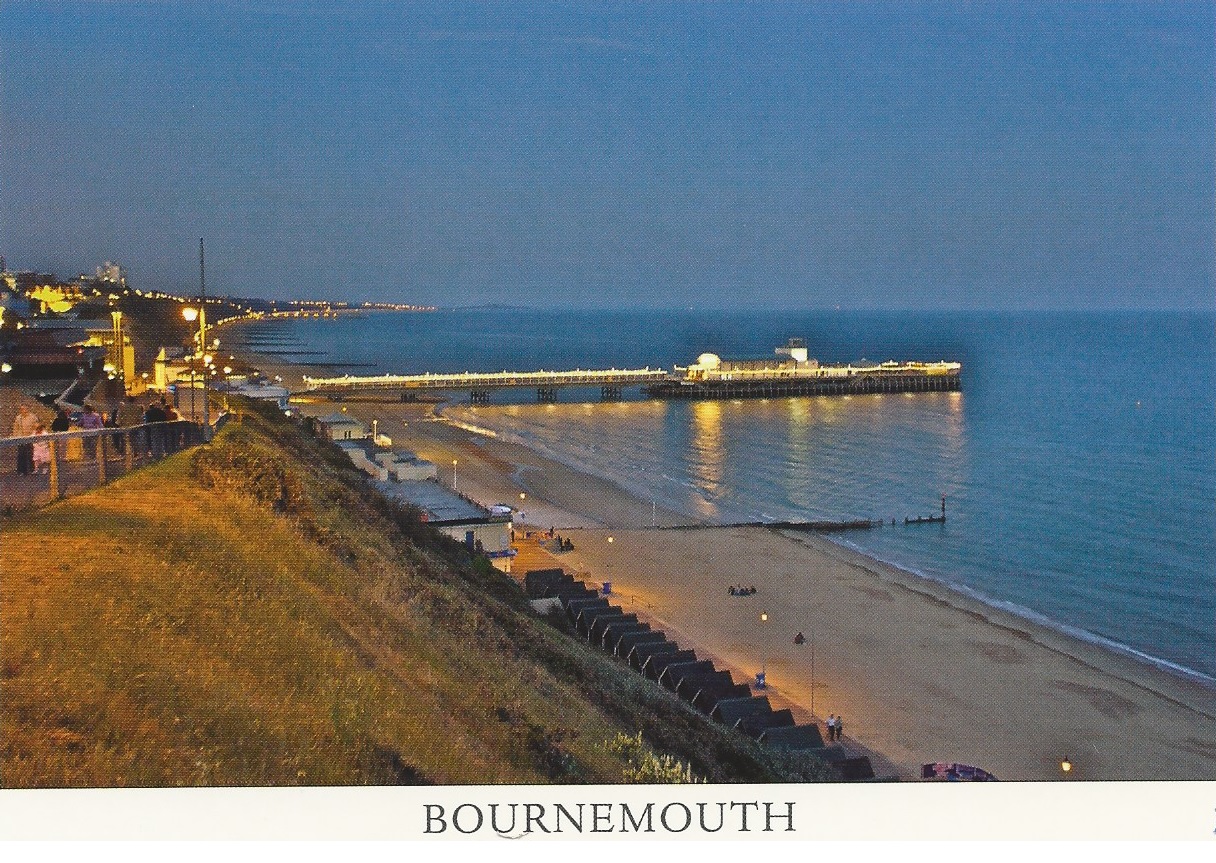
Bournemouth, with its unbroken sweep of sandy beach and overshadowing cliffs, was perfect.

Carfe Castle, Dorset, uk


On our way we caught a glimpse of the ruins of Carfe Castle. It was an 11th century  fortification and had sweeping views over the Channel. There is a fascinating history about its demise.


When we arrived in Bournemouth,  there were many hotels overlooking the beach, but only one really stood out: Hotel Menzies-Carlton.


thYYOARAWJ

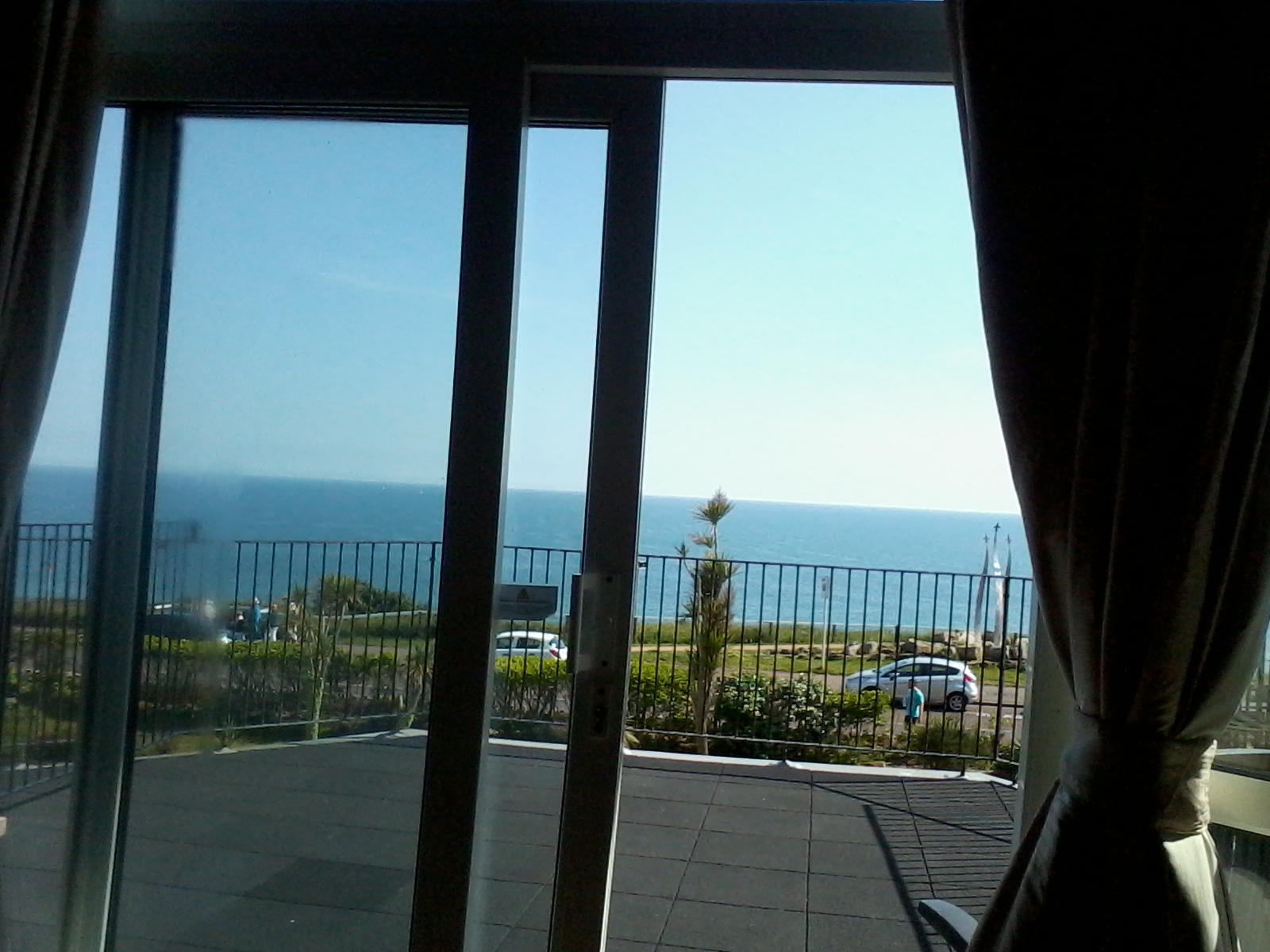
An elegant facility : originally a private home in 1861. Over time it became a luxury 5 star hotel and revamped the original suites into bedrooms and added a “lift” in 1911. We were assigned a lovely 2nd floor room with a large terrace overlooking the English Channel.


Photo062

Needing some exercise, we went for a cliff top  beach walk. The breeze was warm and the view magnificent. We decided not to climb down the 300 plus stairs to the beach today.

Bournemouth

The Pier has maintained much of its antiquity and one can almost see the thousands who came to Bournemouth to board the ocean liners at South-Hampton. Returning to our room, we noticed people swimming in the lovely pool (always a good sign) and an indoor-outdoor  hot-tub ( a better sign).


Photo063 A great way to unwind.

Later, entering the original 1860’s dining room, the smiling Matre’d checked our name and said “You may choose any free table and it will be assigned to you for the 2 day stay.” Naturally we took one overlooking the Channel. I noticed a crowd in the back of the restaurant and discovered they were “bus” people on packages  and had assigned tables. Afterward  Mike carried our unfinished wine through the elegant bar to the outside balcony.
The out side portion of bar

While we were enjoying the sunset, Mike mentioned that in 1944, Generals Eisenhower and Montgomery  stayed here to set up operational tactics for  the Normandy landings. Good chance they sat out here, with cigars and brandy, looking across the Channel to Normandy, discussing strategic moves for the Omaha Landing.


Good weather the next day  so we did go down the 300+ steps to the beach.  Walked out and around the old pier, peering into a new “Coffee Shop”, “Beer Pub” and “Hand-made Stuff” plus restaurants, boat and fishing facilities.

th5PC18NF3

Walking up the hill to this garden area,  we read this sign “This valley was created by ‘channeling’ the river”. You are looking down the hill to the Channel and the pier. On the left side, behind the trees, we had lunch at an outdoor restaurant. Sunburnt and tired, we ate at the hotel that evening.

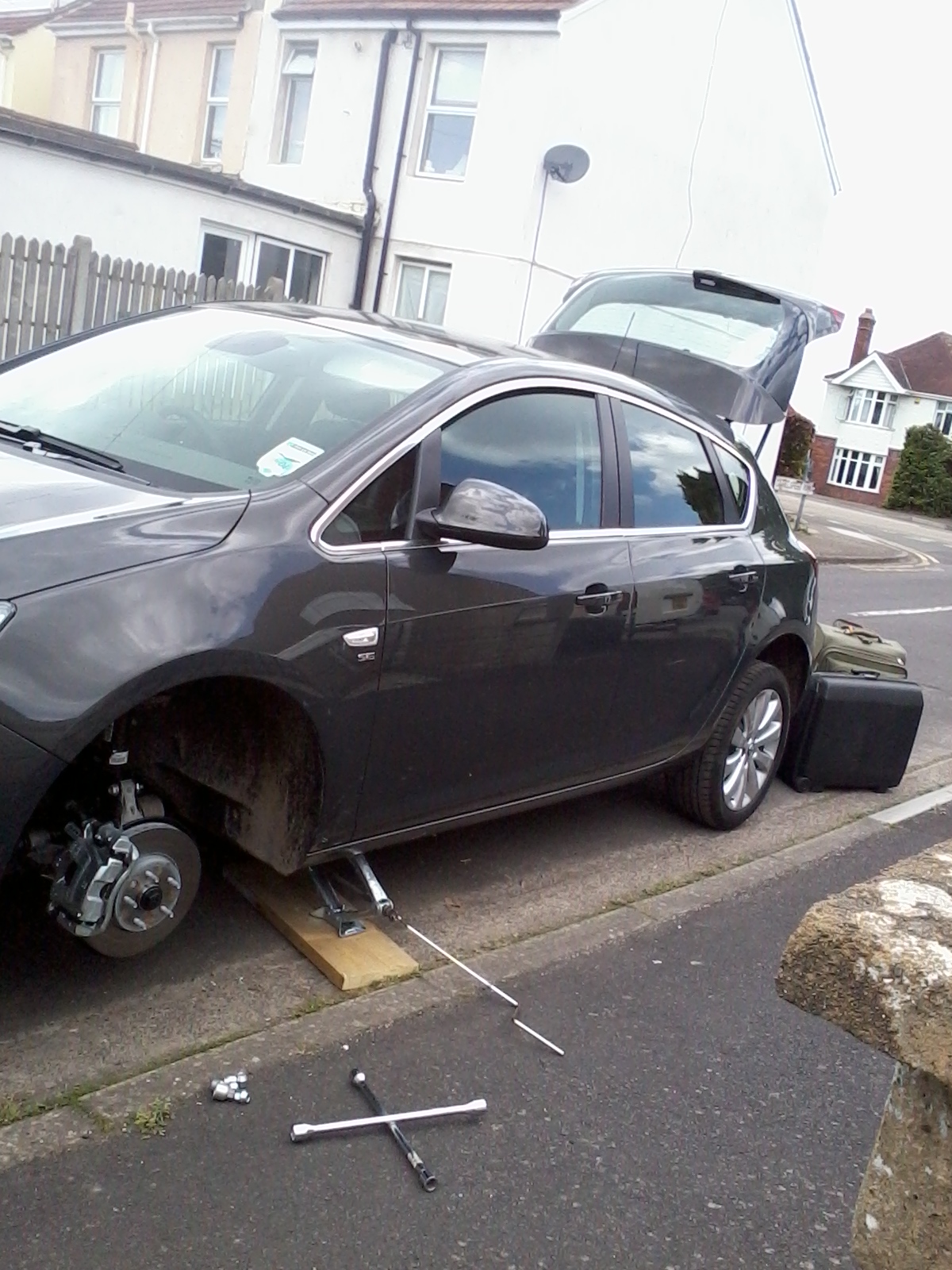
Off to Wells the next morning, but our luck ran out in Yeovil. Mike hit a curb and the front tire tore: a big flapping hole!  On to a side street, remove luggage-“ But no Fkytrs spare tire~!” yelled Mike.

Photo064The catastrophe reversed when Isabella, an elderly woman  from the house overlooking our car, came  out offering coffee, tea and a bathroom.  Then Jamie, 40 and recovering from a job injury, came from across the street  carrying a jack.  Nothing in the rental trunk but a can of spray to inflate the tire!??!

Noon on Saturday and the stores close- but Jamie took Mike to a friend’s shop and he got a new tire.

All this took about 2 hours so we needed Isabella’s hospitality  and Jamie’s generous help.

What wonderful people!

And again,  on to Wells and our reserved Hotel Swan. Checked in and crossed the street to the hotel’s outside patio facing Wells Cathedral.

Wells Cathedral

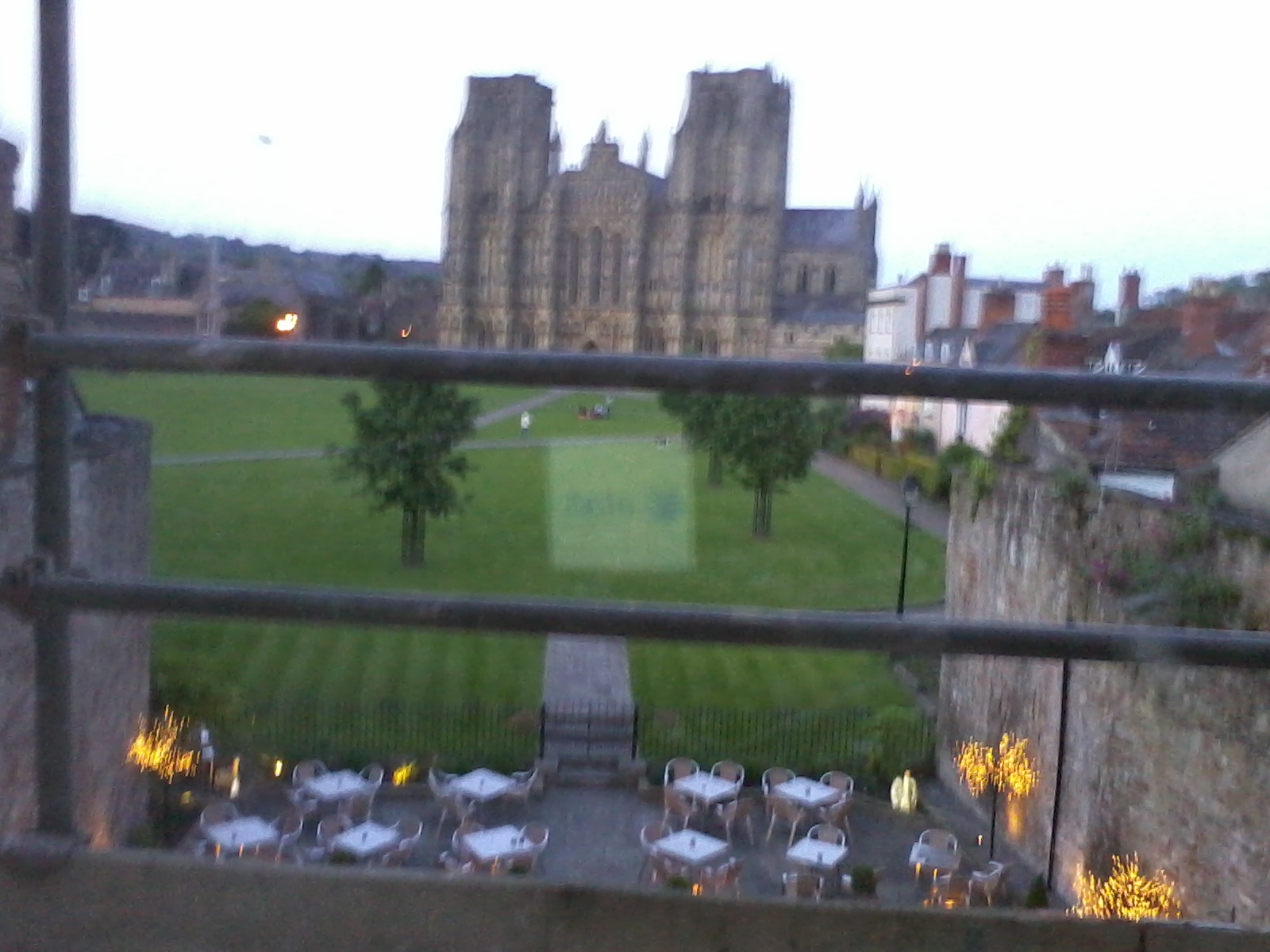
This overwhelming structure was our view! Our lovely 600 year old Hotel Swan (chosen for its antiquity and location) gave us a great 4th floor room-with-a-view,  but had no elevator. Also they were repainting the outside, but thankfully not on the weekend.

Photo065

Looking out the window, I took this picture through the scaffolding,  to show both the Church and the patio.


Sunday morning coffee on the front terrace and people-watch. The Bells of Wells were serenading enticing many to head to the Cathedral.  And we followed.


Nave of Wells Cathedral

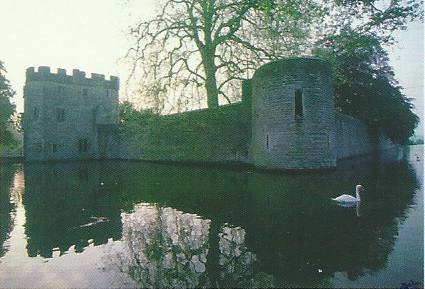
The sermon brief and the music wonderful! Afterward we strolled the grounds to a moat that surrounded “The Bishop’s Palace”

Lake Castle

The information said that these elaborate defense  walls were built to project wealth – and scare off future invaders.  Apparently it worked! Dinner that night at The Crown Pub on Main Street with 2 (slightly tipsy)  Irish gentlemen Singing folksongs. Very well done.


The next morning, off to Cheddar Gorge.


Cheddar Gorge1

An apt name for the village, wedged between  mountains, that made  and sold not only cheddar cheese, but all things cheddar:  cheddar beer, cheddar sweaters….   A delightfully touristy village.

Cheddar Gorge2


When we drove out,  there were people climbing the steep gorges. And on to Oxford.


We found our reserved and expensive MacDonald Randolph Hotel but no street parking or entrance (busses only) except for the $28.00  Valet service.

Randolph-Macdonald Hotel--Oxford

Elegant hotel but a very limited floor plan.  Small registration area (packed) and one small bar in front (packed).  Smoking outside front entrance only. Two elevators… but posted “under repair”.  So we lugged our luggage to the 4th floor. A mammoth dining room but only open at mealtimes but, no problem, we wanted to walk the city. And it was lovely. Classic  academic buildings and delightful alleyways with tiny shops and bars along the cobbled streets. We found a local pub with a patio over shadowed by classic academic structures.

t Red Lion Inn

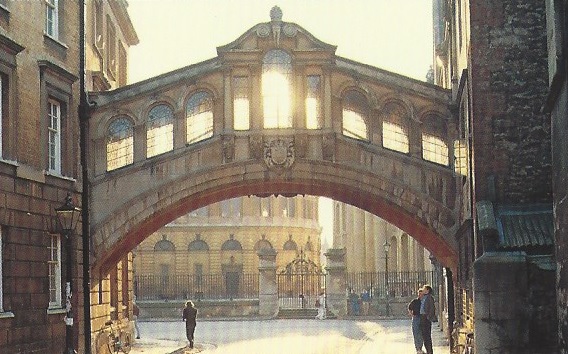
There were many students, talking, reading or writing, but all eating. Some people our age eating…an even better sign. Later we did see the “Oxford Bridge of Signs”…. and it was beautiful. I was disappointed in the original background: an old and new building linked across the road. (I’m not sure about the “signs”….we didn’t see any. Must be a story there.)

Oxford college Bridge of Signs

The next morning we cancelled our 2nd night’s stay and requested a 2   o’clock check-out, and done! We toured several of the college campuses walking through the green courtyards. Students were scuttling from their dorms across the yards to the classrooms and vice versa. The tardy ones ran.


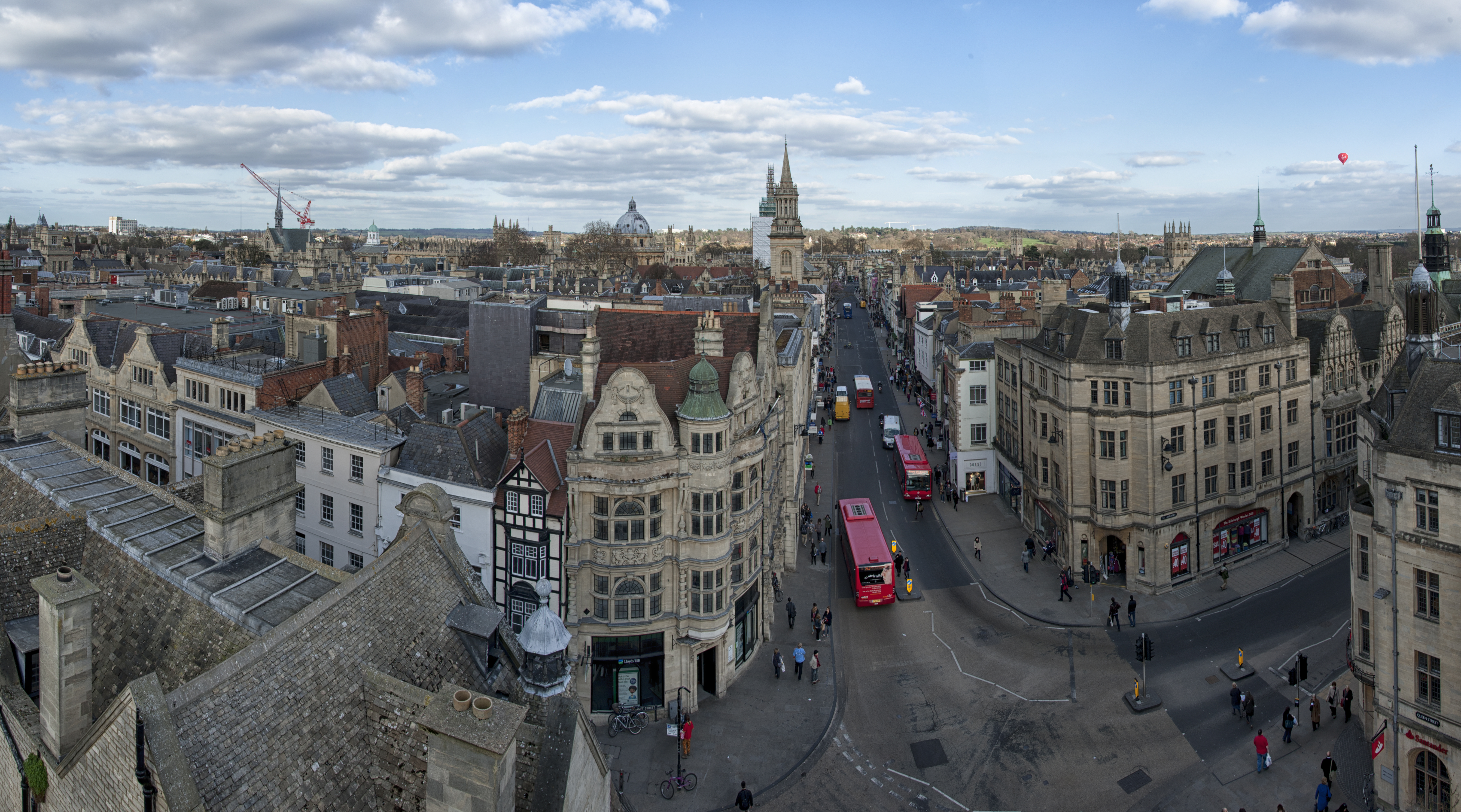
1_view_from_carfax_tower_oxford_2012

This view of a downtown area shows how compacted Oxford  is. Classic buildings with Tudor and Dutch Gothic, among others, and many pedestrian  streets. The one off to your right was pedestrian only.

The elevators were working when we left. On to discover the Bull Hotel near Beaconsfield—only 20 miles from Heathrow and our departure flight tomorrow.

the Bull Hotel

And it was lovely. Nice room, great bar and restaurant with a beautiful garden out back. What a leisurely way to finish our stay in England. And what an extraordinary visit!


12/24/2014

Posted in Wales | 3 Comments

EARLIER: THE BEGINNING

Stone Porch Inn, Evanston Illinois.

This was our planned Murray clan meeting place. Mike and I flew in from LA while brother Frank and wife Sally drove in from Gross Point Woods. And timely that we met in the garage—Frank had to move his SUV over so we could fit our normal rental car in the space. Settling into our rooms we agreed on a diner time and “The Discussion” that would come with it.

And this is where we stayed.

This was the view as we came walking out of the house….eat your heart out….

Tom, our senior Murray was in a Senior Center Care place and we had arranged to meet the next day for lunch. Having contacted Tom’s daughter Suzanne, earlier, Mike and I asked her to arrange for a table: Inside if foul weather and outside if fair conditions. “And all was go”

Being chilly out about 8 of us managed to fit at table, the food and drinks were excellent. After a glass of wine (or 2) talking and laughter abounded. My brother Tom was sitting next to me and he slid over a large envelope, “Read later, I tried to compile information on the Feuerbachers so you can write the history”.

“Why me?” I asked.

“Because you spent your weekends at the Feuerbacher’s home during your time at Fontbonne University and learned more about them as they aged”. He was right. Flora Place was mom’s childhood home in St. Louis, Missouri.

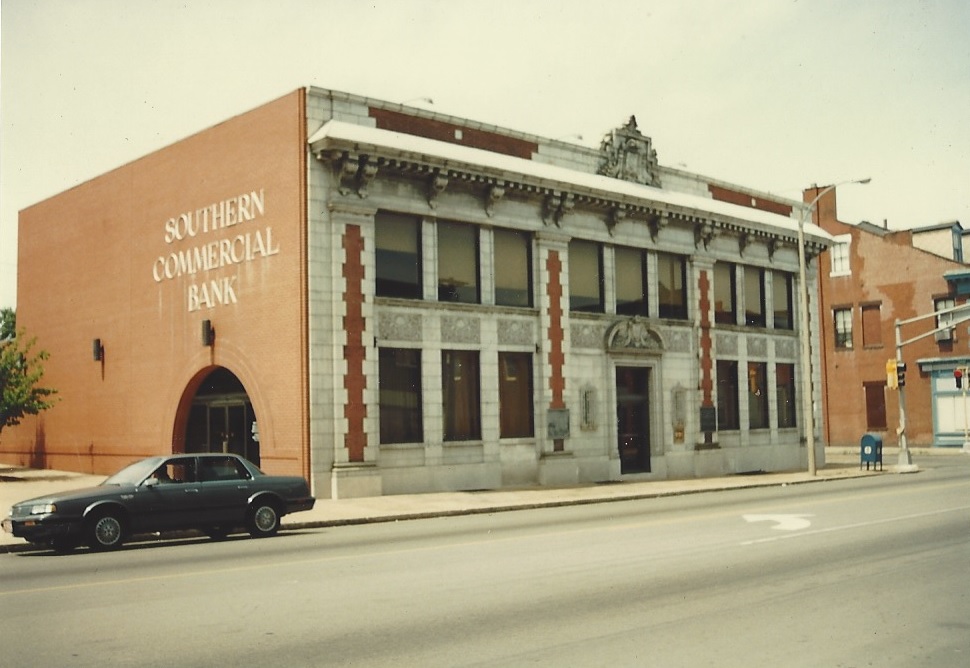
—This next section was taken from a news article written about the history of the Southern Commercial Bank and its founders—One of whom was Frank Feuerbacher….our grandfather.

“In the years following the Civil War, several Carondelet-area banks were organized and failed. In 1891, however, Southern Commercial Bank was founded. Rooted in the values of its immigrant, working class founders, it thrived. For a hundred years, Southern Commercial has played a vital role in the stability of the South Side of St. Louis.

More than any other individual, German-American John Krauss was the inspiration and organizer of this Carondelet institution.


“Krauss then invested his profits and energies in local interests including the Carondelet Zinc Works. Carondelet Flour Mill, and Klausmann Brewery When Klausmann Brewery faltered, Krauss bought it to protect his interests. Under his management the brewery grew multifold. After twelve years, he sold it to an English brewing syndicate for $650,000.

In 1891 Krauss became the first president of the Southern Commercial Bank. When John Krauss died in 1897, there was an interim president until Frank W. Feuerbacher took office in 1898. Frank Feuerbacher, John Krauss’ son-in-law, was stepson and adopted son of the German-American brewer, Max Feuerbacher. Four years later he married Caroline Krauss.

In later picture above see Frank and Caroline. (The above photo was taken with state of the art photography technology at the time.)

Under Frank Feuerbacher’s leadership, Southern Commercial Bank entered a period of rapid growth. By 1904 the bank had outgrown its original storefront and moved to larger quarters at 7203, South Broadway. Only two years later, President Feuerbacher announced the growing institution needed larger quarters. Southern Commercial constructed a new bank building at 7201 South Broadway.

Late in Frank Feuerbacher’s tenure, in 1922, Southern Commercial Bank was one of the first state banks to join the Federal Reserve system. Arthur Henry Feuerbacher succeeded his brother as president of the bank in 1928.

In 1930, as banks across the nation faltered, conservative Southern Commercial Bank was able to celebrate its steady growth by Opening its current stone and brick building on South Broadway.”

*Courtesy of NiNi Harris, “A HISTORY OF CARONDELET”

(You may receive a copy of “A HISTORY OF CARONDELET” at any Southern Commercial Bank location by making a $5.00 donation to The Carondelet Historical Society!)

To be continued…

Posted in America | Leave a comment

China: Beijing


Cell Phone 014

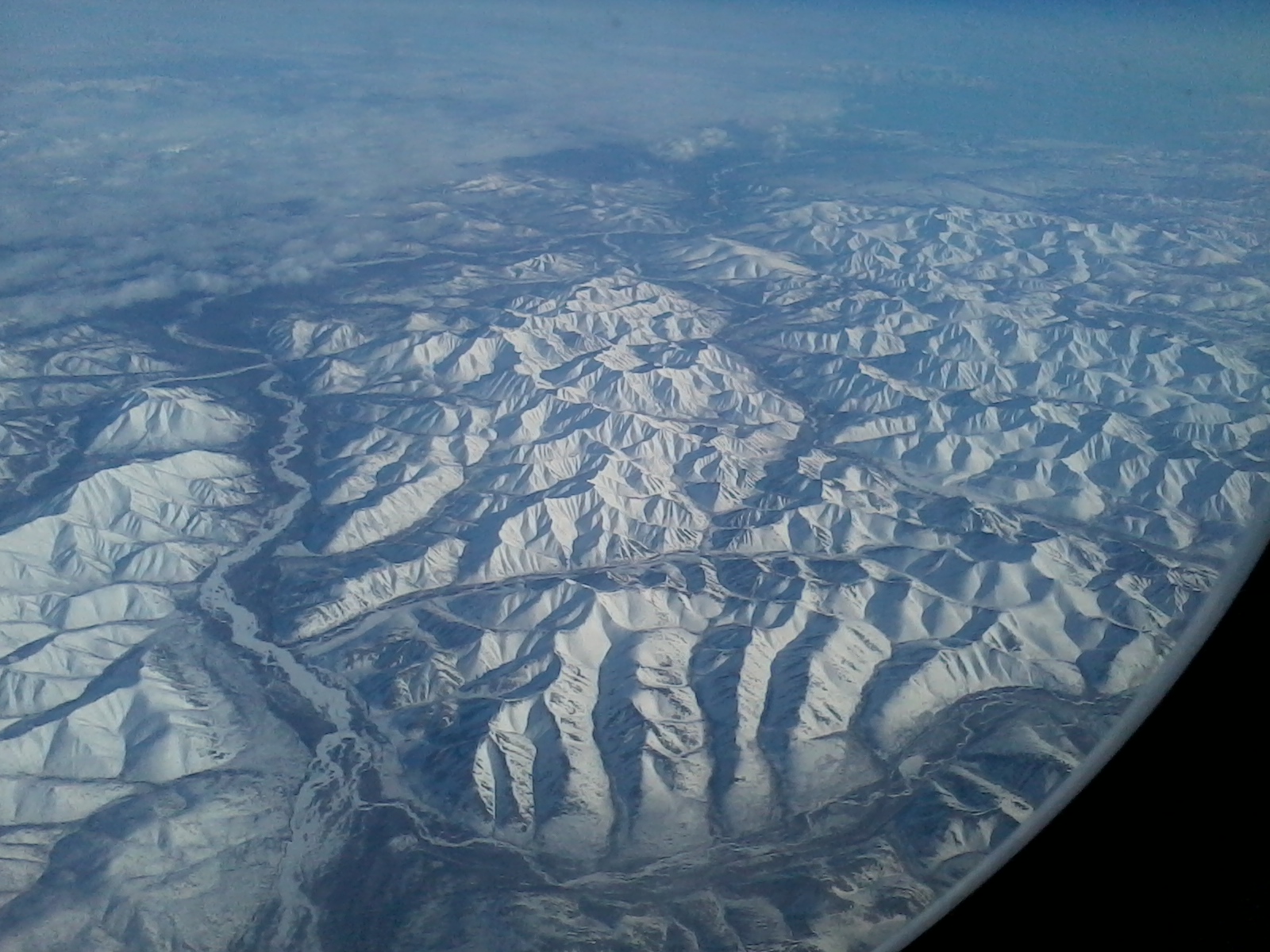
I took this picture when plastered against the window, about 30 minutes before we landed.  (Probably over Manchuria) The fog and smog was about the same as flying into San Francisco. Happy to see our guide “Charlie” with a big sign “BOTWINS” after the 15 hour flights (albeit 1st class—using miles) and a bit wobbly from the food and wine on the long flight.

Cell Phone 015

By 8 PM we were checked in to this lovely Beijing Red Wall Garden Hotel. The rooms facing the courtyard were split level: living room and bath down stairs and bedroom up. I had to mention this because we learned to leave a light on below for when nature called after dark. (Mike’s OK, no broken bones.) But we did have a glass of Chinese rose winé (delicious!) in the courtyard before bed.

The next morning Charlie and our driver were picking us up at 10 AM for The Forbidden City. (He had wanted 8 AM, I wanted 11…so we compromised.)

Tiananmen Square Appropriate start at Tiananmen Square where the squashed “youth” revolt for Democracy happened in 1989. We bypassed seeing Mao’s frozen body arising from his Museum between 7 and 11 AM and then descending for refreezing. (A dead body, frozen or not, wasn’t one of our priorities.)

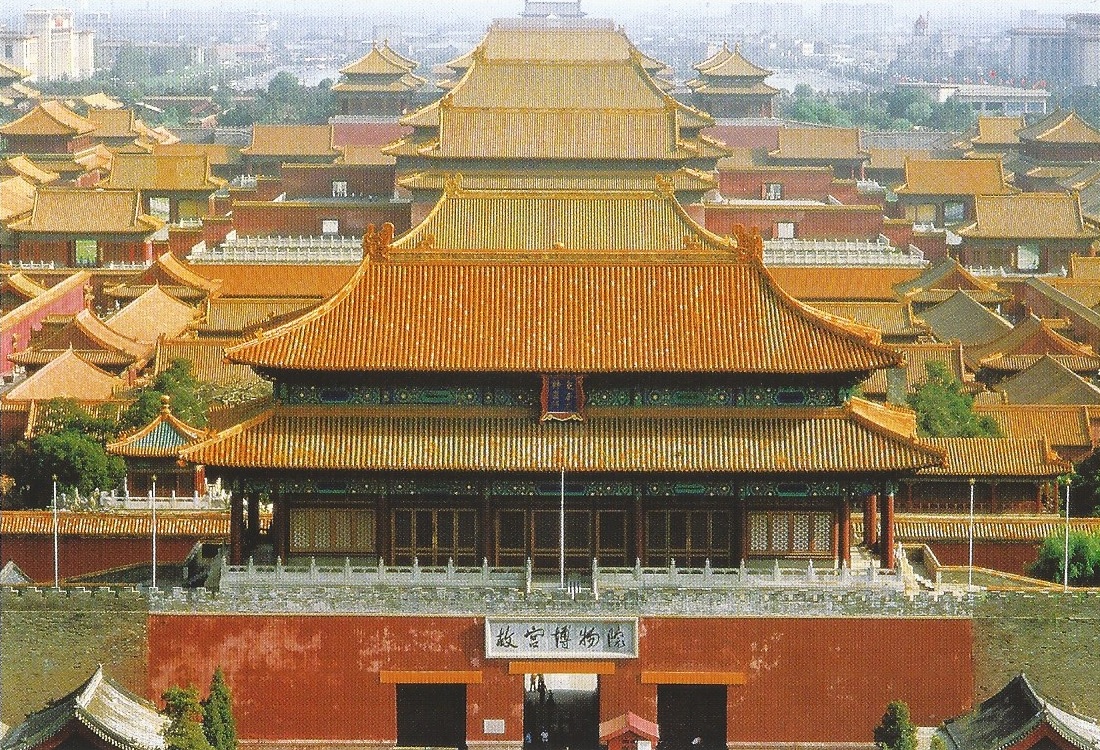
Gate of Divine Might

This was the enormous entrance to The Forbidden City….directly across from where Chinese youth protested for Democracy…. The Palace of Devine Might also is officially known as the Palace Museum, completed in 1420, and forms both the heart and center of the Chinese universe.

Hall of Supreme Harmony

This Hall of Supreme Harmony was the imperial court until the abdication of the emperor in 1912.  (Opened to the public in 1949)  It is the tallest building in The Hidden City and used by the emperor for major occasions. Inside this hall his throne sits under this spectacularly ornate ceiling. Tired, we ended our tour with the Imperial Garden.

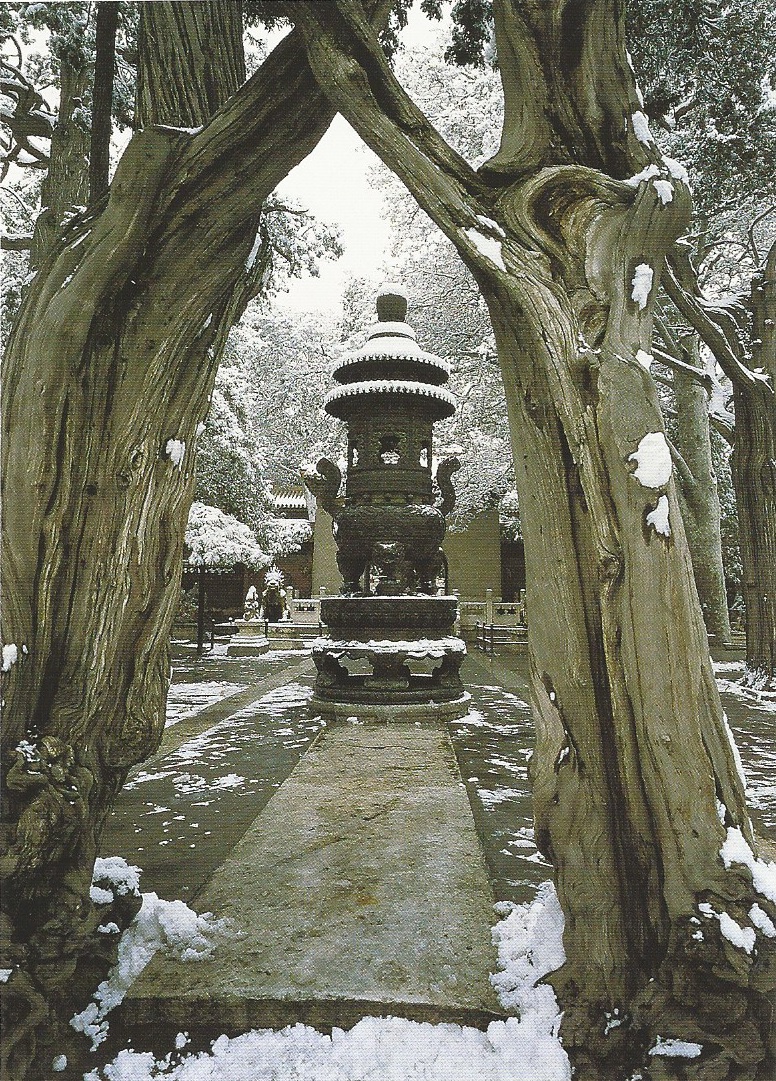
Imperial Garden

This was the only picture I could find…but it was lush and green when we saw it. A quick lunch (I would have preferred a nap) but Beijing’s Courtyard Houses (hutongs) were quickly disappearing into tall buildings and businesses due to the rapid growth of a city with 20 million plus people. And the Hutongs expanded as in the following picture.

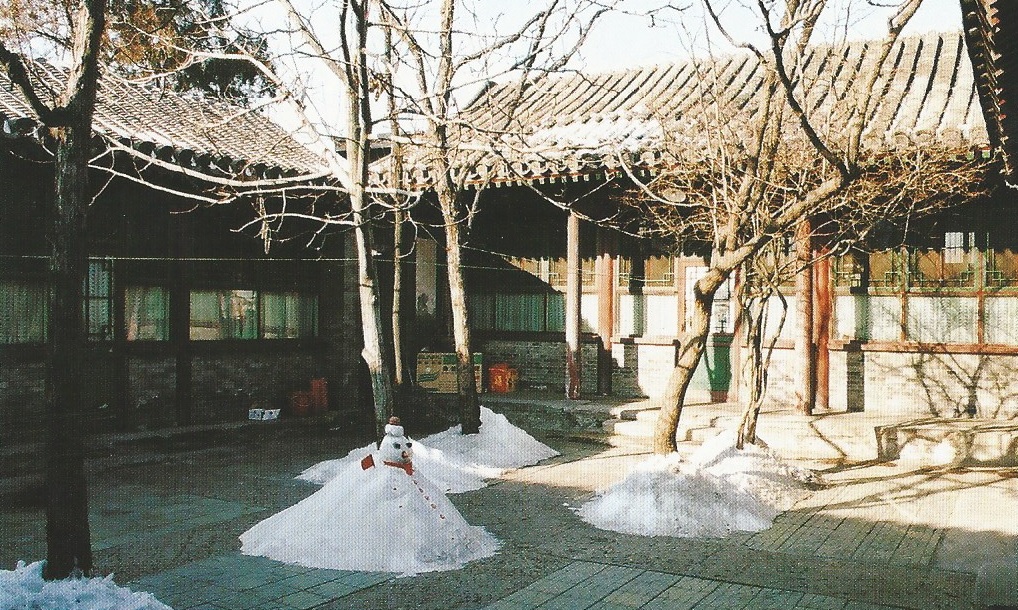
Courtyard in Nanchizi AreaCharlie had scheduled us for a rickshaw tour but we arrived to find nothing available!  Our excellent leader moved quickly and forced them to produce 2 drivers and rickshaws in ten minutes.  The service did….but the teenaged drivers were inexperienced and “yapped” at each other constantly, never pausing at an open doorway. At the end Mike paid the prearranged fee but NO TIP.  The kids stood there looking pissed…but I was furious. Loudly saying NO TIP…I pointed to one saying “Yap, Yap,Yap” then pointed to the other and said the same…then reversed it. NO TIP!  They understood.

Charlie made up for the kids’ immaturity by taking us to a nearby hutong of a friend. We entered her small courtyard and she waved us into her 2 room apartment. Family members also had rooms there and she pointed out 3 other doors. (We could have skipped the rickshaws altogether for the insight we got from seeing this!) Other hutongs.

Prince Xunis MansionThis was the original home of Prince Zunis and his family and  now has become government offices….but allows us to see the beauty of an original hutong courtyard.

Courtyard in Dajingchang Huton

This 2nd courtyard also shows space available but already has  “family rooms” built in…with probably more to come.

Courtyard in Doufuchi Hutong This hutong, shows the home security of the thick outside walls  with a small view of the single courtyard entrance just off the alleyway. Many hutongs, already owned by senior family members (or purchased by them) gradually expanded with additional building and adding family members….all within the large courtyards. Consequently a strong community spirit grew.

The next morning we were whisked off to The Great Wall of China.

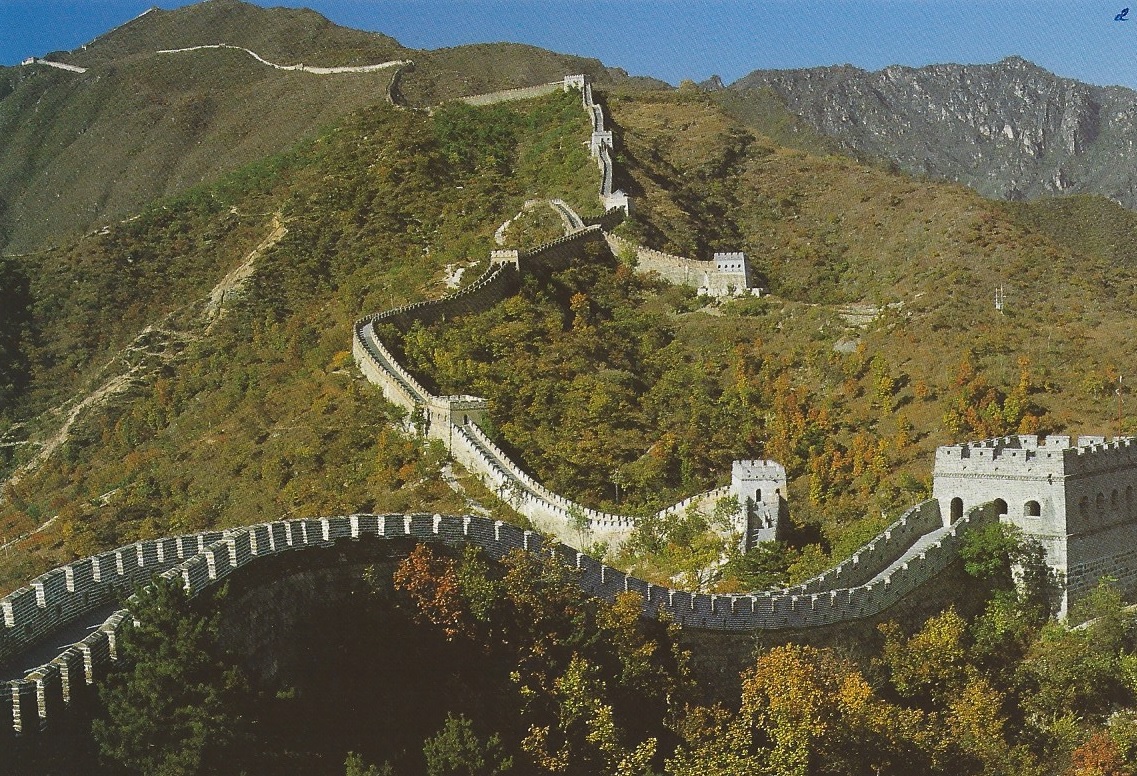
Great Wall on moutain ridgeA symbol of China’s vulnerability, this wall covered several thousand miles. Originally just earthen ramparts, the wall was created only after China’s unification in 221-210 BC. Ultimately ineffective as it was breached by the Mongols in the 13th century and later by the Manchu. Today, as a UNESCO World Heritage Site, select portions of the crumbling sections have been fully restored.

A great day for an hour and half drive through the mountains to walk on this great cultural site!

Great Wall on moutain ridge 2

We decided on the 10 minute cable car ride to the top, thinking the rest would be mostly down hill…HA! The picture above shows we arrived at the top but walked down to the next guard tower and up to the following tower…etc…..and THEN had to return the same way to the cable car.  Whew….but spectacular!

Later that evening we were reserved for the national food favorite at The Peking Duck, which is all they serve.  At first I was a little disturbed to see the salads (wrapped in plastic) on the table. Then a large cart with a steaming duck breast pulled alongside….and the wonderful odor obliterated everything else. We were supplied with pancakes, vegetables and sauce and the thin slices of duck….all folded into the thin pancakes and eaten.  And we did!

Hate to leave Beijing tomorrow but we are starting our wine tour.

8/23/2015

Posted in China | 2 Comments

The Serendipity of Senior Malfunctions when traveling Independently

This first segment has to do with “closed” mountain passes, “bus” people,  (derogatory, yes…due to being independent-travelers), hotel and motorcycles.

Driving to Lake Bled, Slovenia  was nerve wracking with narrow roads and hairpin turns, additionally  complicated with falling snow. But on the plus side, there was little traffic and at the top of Julian Alps, none. Julian alps Then the clouds split, the sun shined and we stopped to see the spectacular scenery surrounding us.

When we drove  again, the snow returned, but stopped just before we reached Lake Bled. (We later found out the road had been “closed” but we could  not read the Slovenian signs.) Lake Bed Slovenia

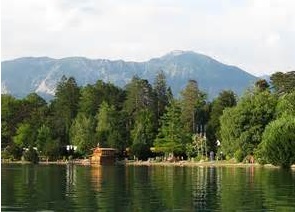
This tiny lake is surrounded by lush mountains and centered with a small island containing a castle and a church. The surrounding mountains are snow-capped, but almost none around the lake.

We chose Park Hotel, notably for its view of the lake, which we could see from our balcony.   Park hotel The lovely  dining room was only open for breakfast and the service bar in the empty lobby was only staffed just before busses arrived …and departed. We walked down to the lake and found a small restaurant  “Rike”  overlooking the water and serving excellent trout. The next morning we arrived at the dining room at 8:30, and hordes of people  were racing from the dining room to their busses. The waiter started to close the door but we said it’s only 8:30 and he said we usually close the doors when the busses leave. Mike said we don’t have a bus. The buffet was cleaned out, only some lettuce leaves and cold toast. The waiter looked at us “What would you like?” And it was good.

There was a 5 mile pathway around the lake, the weather good and exercise was needed. Tree branches overhead, birds, frogs, water frothing on the sand…wonderful. Near the end of the trail we saw a campsite. Camp ground Lake Bed Just as we bought  coffee and sat at a table, at least 50 motorcycles  (not shown in this picture) roared in.  Guitars appeared, songs rang out, beer was flowing….a very jolly group!  With only a mile to go, and  they would be passing us on a dirt road, we decided to wait till they left. (Some less steady than others.)   We had really enjoyed their conviviality! Some of our “malfunctions” when traveling were the best part.


1/11/2015

Posted in Slovenia | Leave a comment

The Serendipity of Independent Travelers Malfunctions…..when seeing new places

and just down the street...

Raised in Ohio in a rectangular house with rooms the same, filled with French and Italian Provincial furniture, Casa Batllo, in Barcelona, was a new awakening for me.

Antoni Gaudi, born in 1852 and died under the wheels of a bus in 1926 on his way to church, was a brilliant proponent of organic design and leader of the Spanish avant-guard.  He renovated this building for Joseph Batllo in 1901 and it became the focal point of the block. But this was the first time I had seen Casa Batllo with its  organic and graceful movement from the ground to the rooftop.

Staircase in Casa BatiloThe front entrance leads directly to the staircase…the kind that makes you want to race up the steps, jump on the rail and slide ! (Not a good idea if you want to see the rest of the house.)

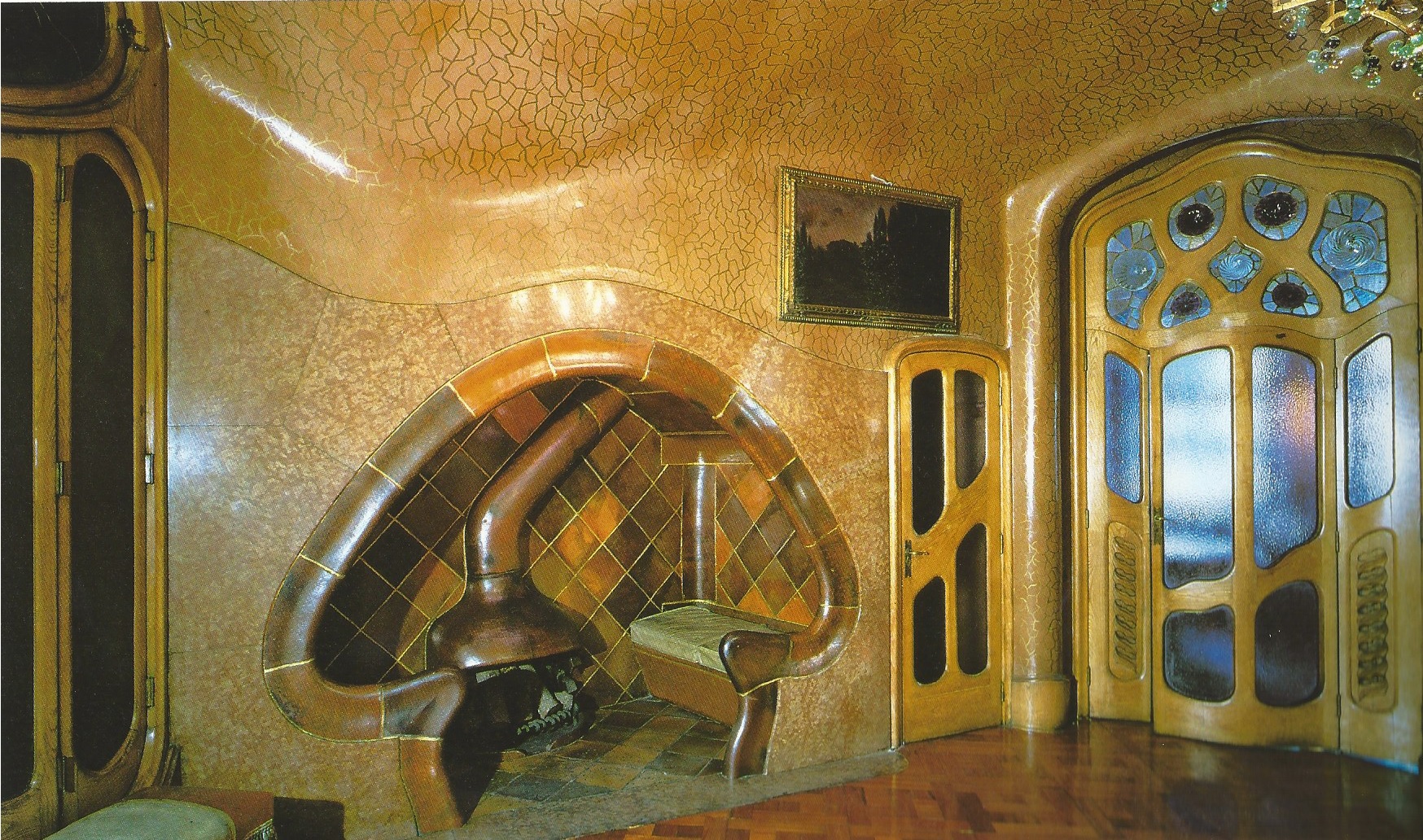
Casa Batllo interior

Since there are no straight lines or corners in this building (or many others), the curvature leads your eye to the fireplace! What a spot to curl up with a book/wine in such a comfy location.

Then to the large front room we saw from the street.

Casa_batllo Now we are looking out these wild curvaceous windows to the world beyond.

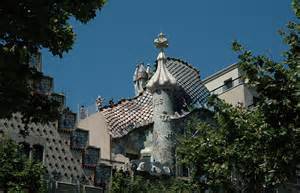
Already overwhelmed by the house, I was not prepared for the rooftop. Although you can only see it from the street side, it’s worth it.

Casa Batllo Rooftop

Gaudi “sweeps” his building upwards to be encircled by a serpent’s tail….a combination of curves studded with broken glass, colored clay chips and topped with darker colored balls: a vibrant reptile protecting the building below.

Gaudi was hindered by rheumatic ailments all his life….consequently he channeled all his energy and passion into his “creations”.

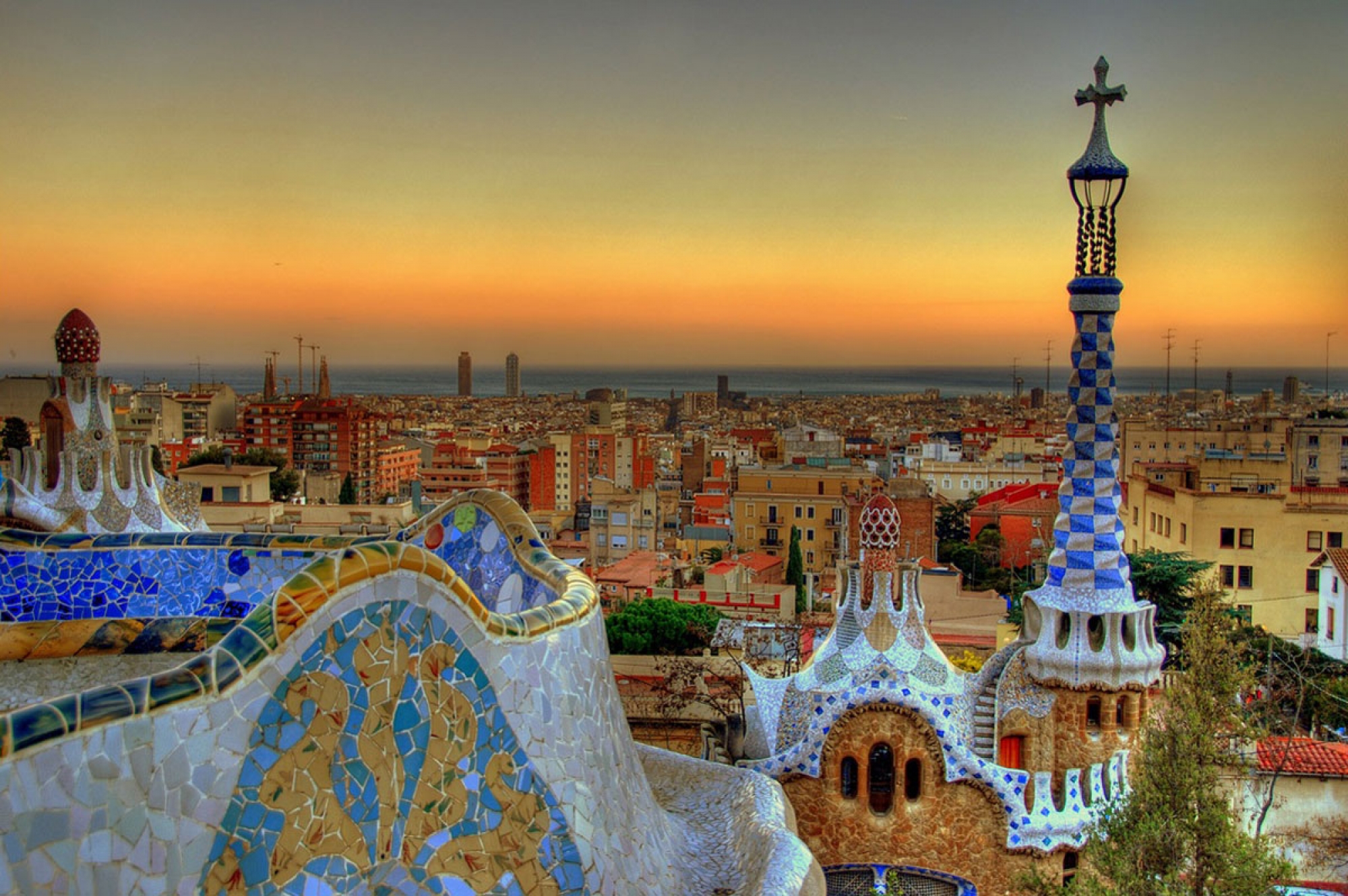
And from a magically  remodeled house, we see the “creation” of a   magic park: Guell Park (1900 to 1914).

Guell ParkEusebi Guell, owner of the property, originally planned for an “exemplary” suburban  colony of homes.  Yet Gaudi built a park……to the benefit of all of Barcelona!

The land was barren with stony, dry earth which made it unsuitable for both a settlement or a park.  Look at the picture here of the entrance.  Parallel stairs circling what seems to be a large “planter” which, in reality, is a deep cistern  collecting the rain water so vitally needed for the shrubs and trees. There were some steep hillsides on this 50 acre plot of land where Gaudi incorporated  the rain runoff into collection viaducts  for filling the cisterns.

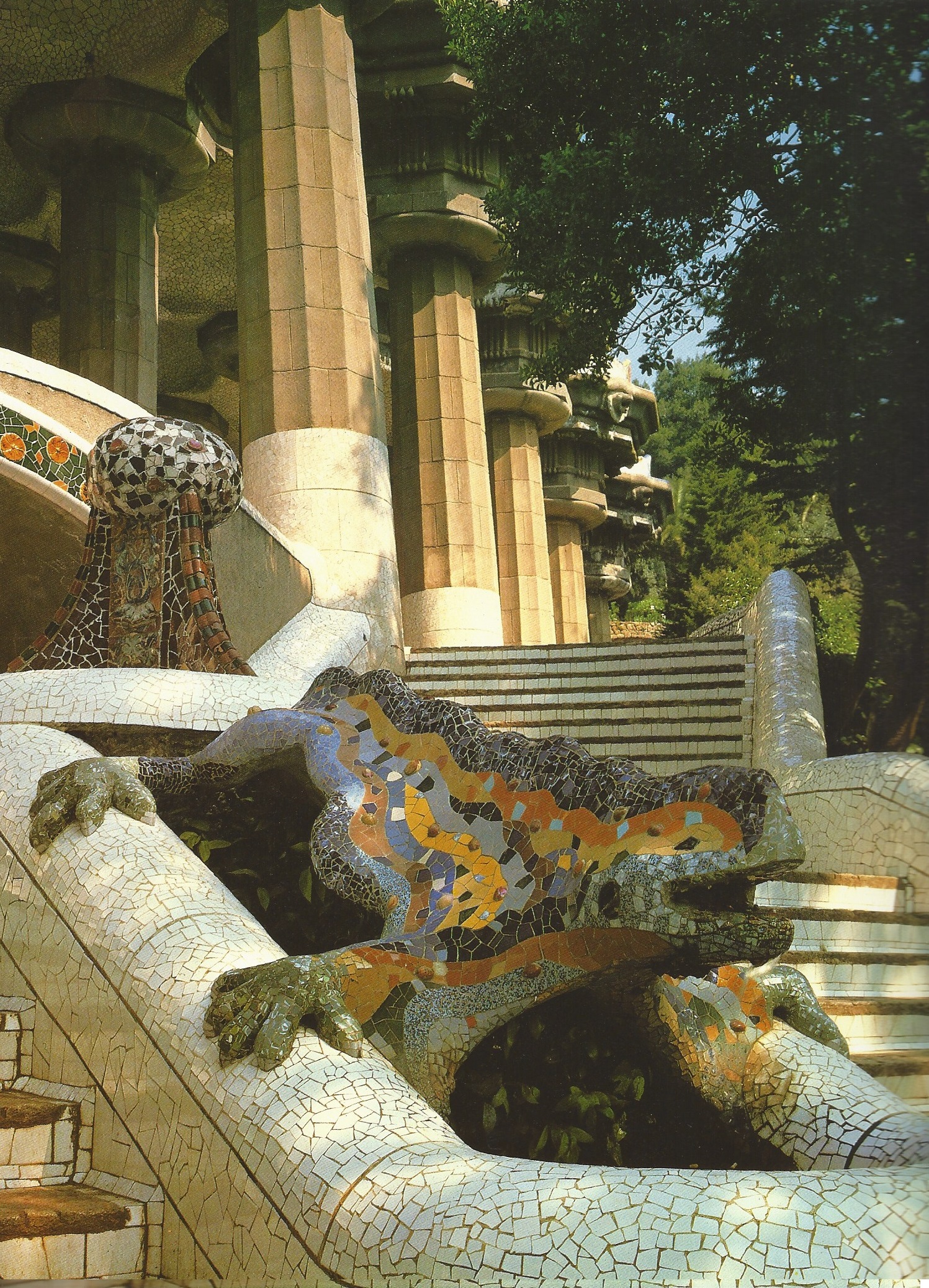
Guell Park Lizard

Coming up the staircase we find the “Dragon/Protector” covering covering another cistern. He represents “Python”, the guardian of subterranean water. This leads us to the columns rising behind him.

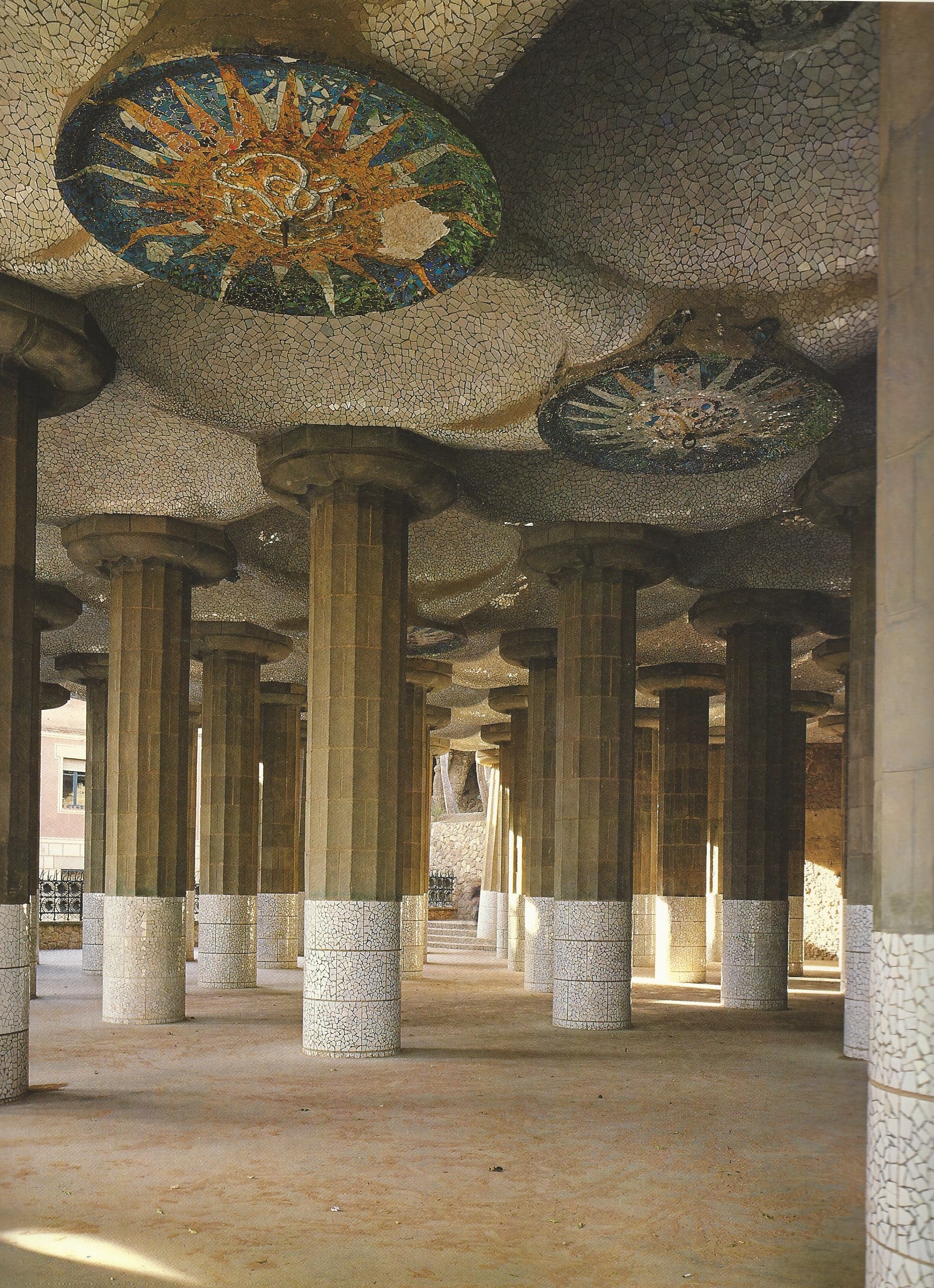
Guell Park Pillars

This columned hall both keeps one dry and supports the roof, which serves as the floor for the Greek theatre above.  They are Doric columns with colorful and brilliant motifs.

Gaudi almost completely built this park using material found in the existing landscape.  Building roads and viaducts produced stones and rubble which he incorporated in his construction: preceding the “collage” technique of the Dadaists in the 20’s.

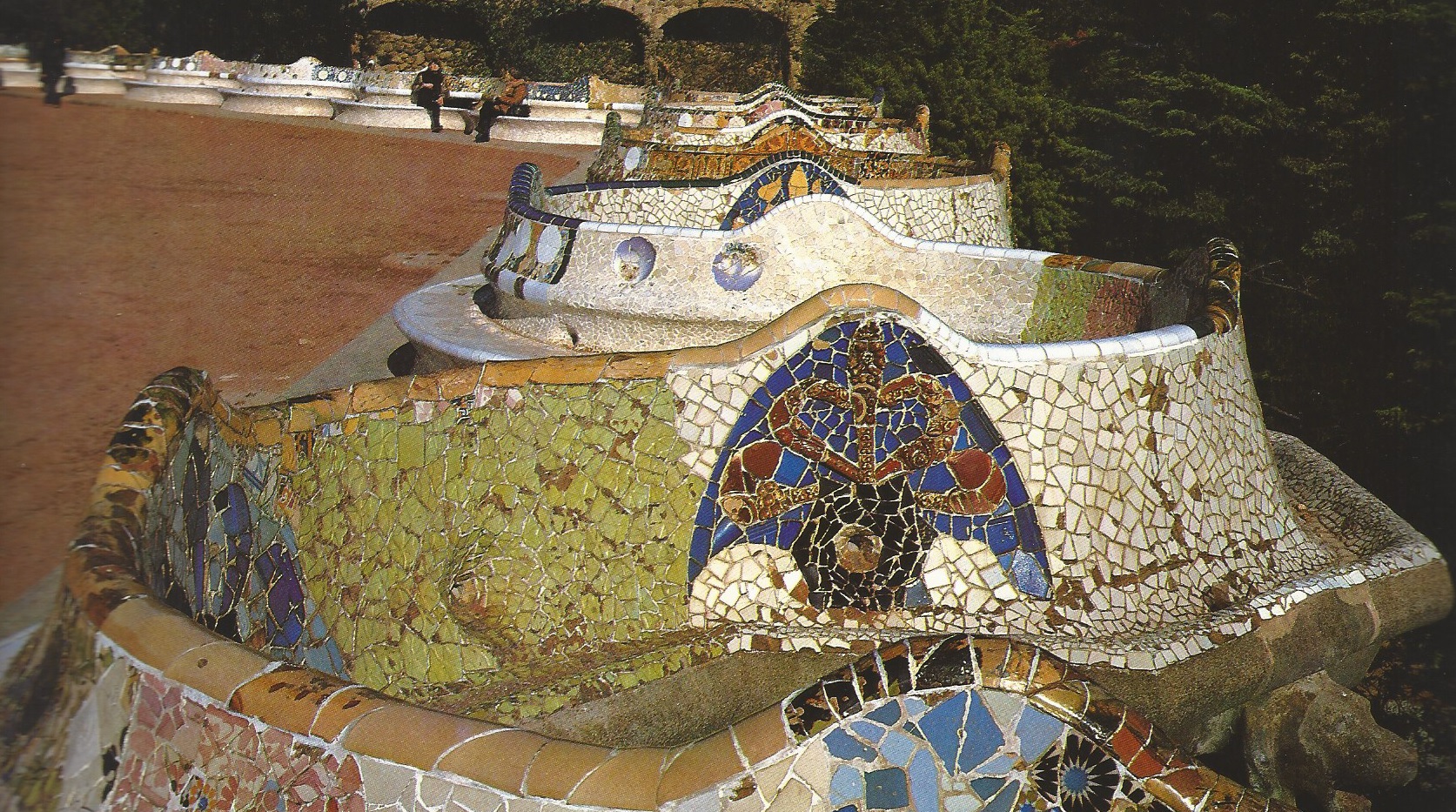
Guell Park Bench

Here Gaudi outdid himself with the “ Terrace” and  “Market” place. The park benches are faced with mosaics of broken, colorful tiles and faience chips.  Individuals/groups could visit…or not…with extraordinary privacy, sitting on the comfortable benches in sun or shade.  And they did and do!……(Gaudi actually had one of the workers sit, butt-naked, on the damp concrete in order to replicate the human figure.)

This last picture gives us an idea of how far Barcelona had to grow to catch up with Antoni Gaudi!

Park GuellV0YTYYz8_H

Our Serendipity has been not tearing down our old house when we got home from this trip….but making softening changes over time. We use to have 8 trees in our garden… now we have 15… that’s a start!

3/29/15


Posted in Spain | 1 Comment

Bits of Ireland

New Grange Meath

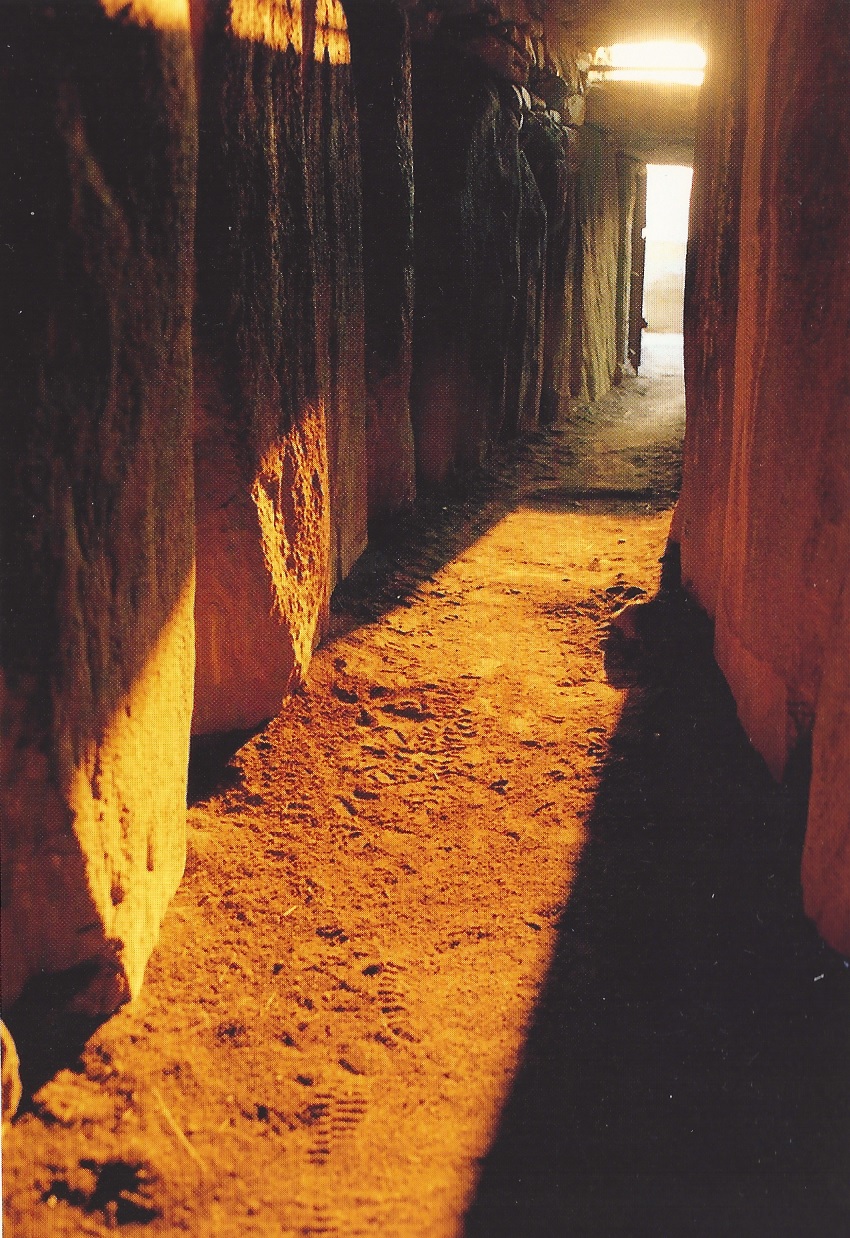
This 5000 year old Newgrange Stone age neolithic Passage tomb near Dublin, Ireland, continues to be a mystery. It predates both Stonehenge and the Egyptian Pyramids. We do know that one of their purposes was for the spiritual  passage of the dead but not much else. Newgrange (above)  was structured so that  the sun directly entered the main chamber only on the Winter Solstice.

NewgrangeThe Winter Solsticesun shines through this passage way.

The entrance stone and the structure were all done by hand—no metal tools—only stone on stone carving  and physical brawn for moving the stones. These boulders were counterbalanced perfectly, obviously, having  remained stable for 5000 years.

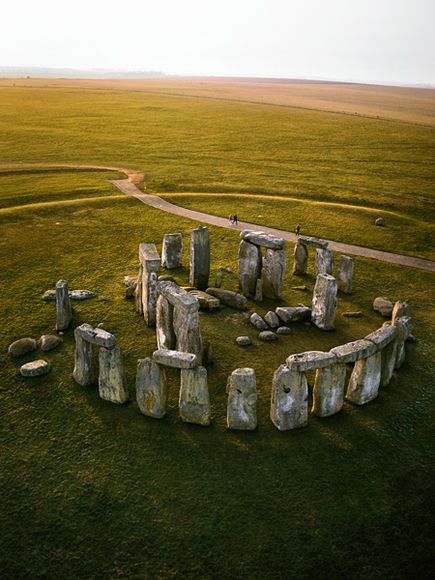
britain-ireland-stonehenge_25699_600x450

Old Stonehenge

G-05-EIS-C-6188

Restored Stonehenge

The Irish Stonehenge, County Meath, are tombs with upright stones, from 3200 years ago. After being plundered and with eventual  deterioration, they were extensively restored.

The “passage tombs” were not limited to any one country but spread  about and covering a a period over 5000 years..

vetulonia_passage

Vetulonia passage

The following was uncovered in Tuscany. This Vitulonia Etruscan passage tomb is dated about 5000 years ago and is included because of its similarity  to Newgrange.

All done by hand, stone balanced on stone with a central corridor with burial rooms opening to the sides.

Late that night at our hotel by Newgrange, an incident occurred that restored my faith in the Irish. September is the month for weddings and our hotel was packed with pre-and-post  attendees. About 2am there came a loud shouting from below our window. It continued for a bit and then I saw the most vocal man pound on a bus. And then quiet.

At 4am another disturbance erupted. Shortly another man beat on a curb-side cab. Then quiet. My husband started grumbling. I said “No!” (Being Irish) These are MY people and they settle disputes differently!

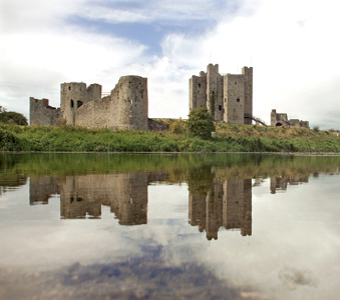
The next morning  we were off to Trim Castle. Built in 1174, it is now notable for being used in Mel Gibson’s Braveheart  film.

Trime Castle

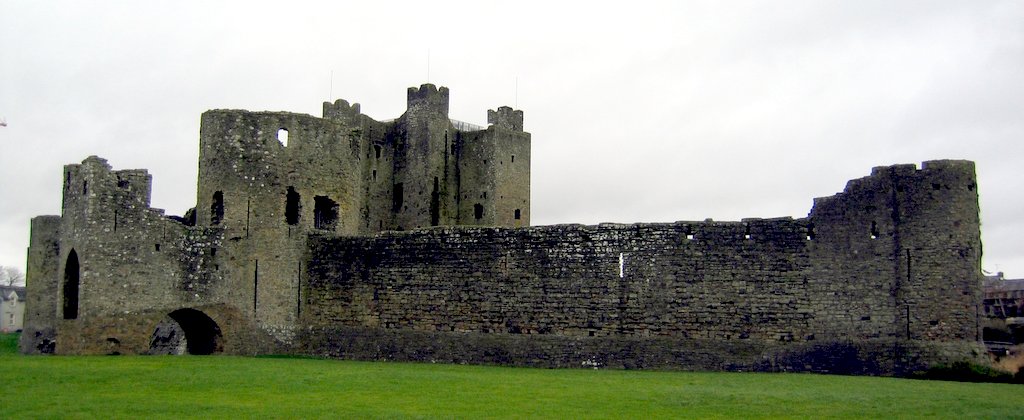
Because of the usual battles, It had to be rebuilt in 1224. The main outer wall was erected in 1250, and although tattered by many conflicts, is a most impressive fortification yet.

Trim Castle present

Trim Castle present

We walked around the luscious, green fields, watching the sheep as they trimmed the grass. Inside the castle walls, we were surprised to see safety measures –probably added both for Braveheart and tourists.

See the added picture of the staircase.

Trim Castle Interior

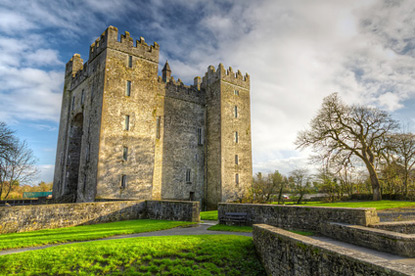
Onto Bunratty Castle which, being strategically located on the Shannon estuary near Limerick, and the Irish Sea,  was constantly attacked.

Built around 1200, it was a ruin by 1950 when Lord Gort  purchased  and restored it to the original state. He spared no expense in the beautiful restoration. But he should have added an elevator. Six flights of Stairs!

bunratty_castle-3

Over time they added a” Folk Park”to the back, including a 15th village containing transported structures taken from area towns: weaver’s shop, laborer’s cottage, corn mill …..and thankfully, a Pub.

We then continued to Galway for respite……which was not to be. Our hotel had 7 beautiful pubs on different levels and only one restaurant, which, thankfully, was quiet.
Galway
The Irish are a very vital and social people! After dinner we took “The Long Walk” down to the harbor and the Spanish Arch which was built in 1584 to protect the Spanish traders unloading their ships.
Luckily our hotel room was distanced from the bars so we had a good night’s sleep. Tomorrow we drive to Limerick and my reason for this trip. My great grandfather and great grand mother were originally from  Limerick and after immigrating, they met and married in New York. I wanted to see where they lived and their town.
As we crossed the Shannon River we saw King John’s Castle across the water and it was magnificent!
     th
Having mailed  my info to the Limerick ancestry months earlier,  they told me to come in and see what they had. We did and it was depressing. There was the info where each had lived but the area had been removed.
Mike suggested  I check out “Murrays” in the phone book but there were over a hundred. He said call some but be prepared for a response about the old family castle that just needs the back taxes paid. I compensated for this historical  loss by walking the city…and it was lovely.  We crossed the bridge and  entered the back of King John’s Castle for a tour.
I pictured my “Greats” having walked these same pathways and seeing the same sights. I loved this city!
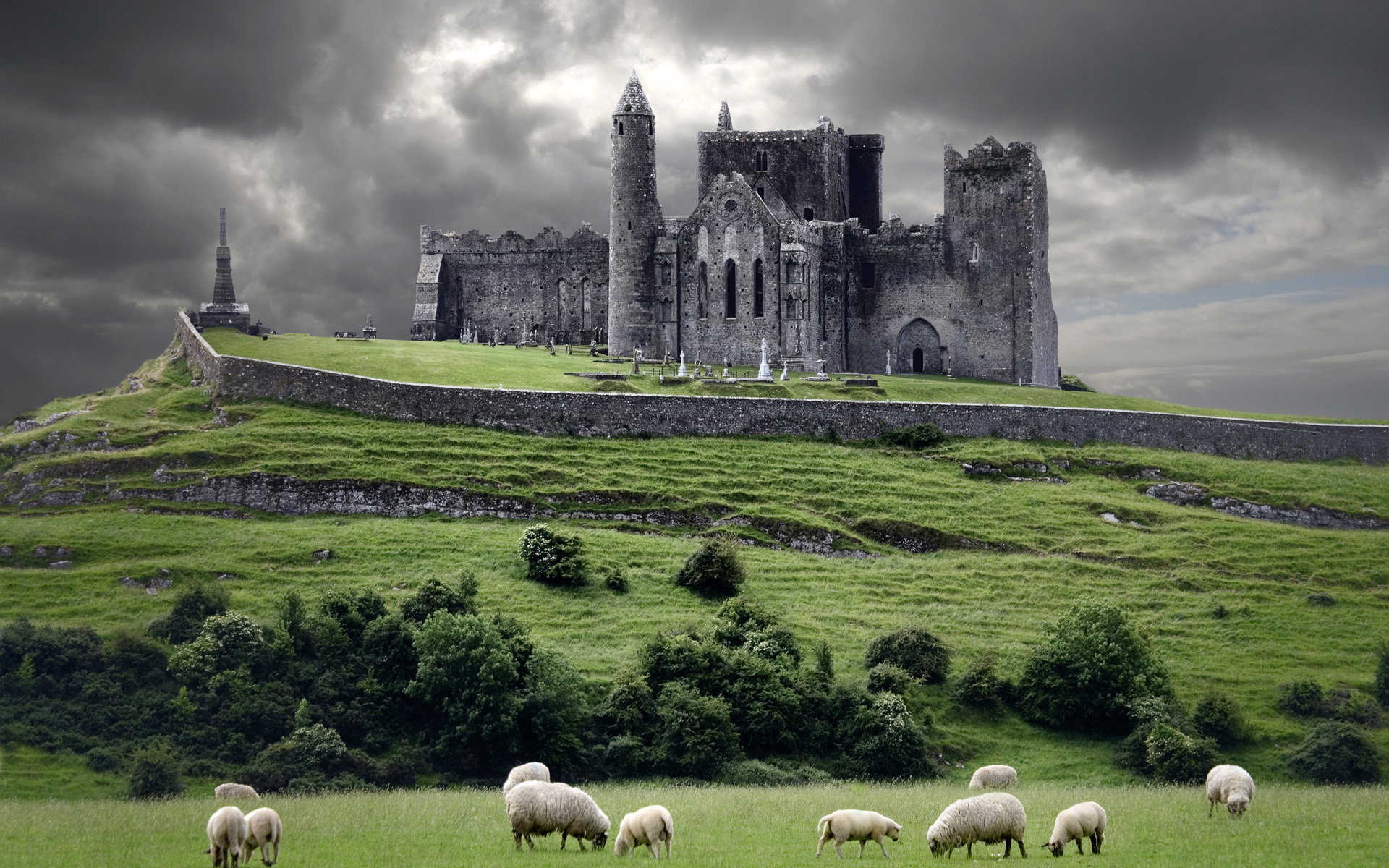
A bit wiser, we ended our trip to Ireland  by heading for the Rock of Cashel on the Tipperary Plain. Begun in the 5th century, it was the seat of the Kings of Munster who then got tired of the cold and gave it to the Church in 1101.      
And it was abandoned  in the 18th century. But luckily for us, the sun was shining while we walked the site and ended up in the roofless—but magnificent Cathedral.
????????????????????????????????????????????????????
Back to the car and on to Dublin where we would fly back to San Francisco.
1/27/2014
Posted in Ireland | 3 Comments

The Templar Knights of La Couvertoirade

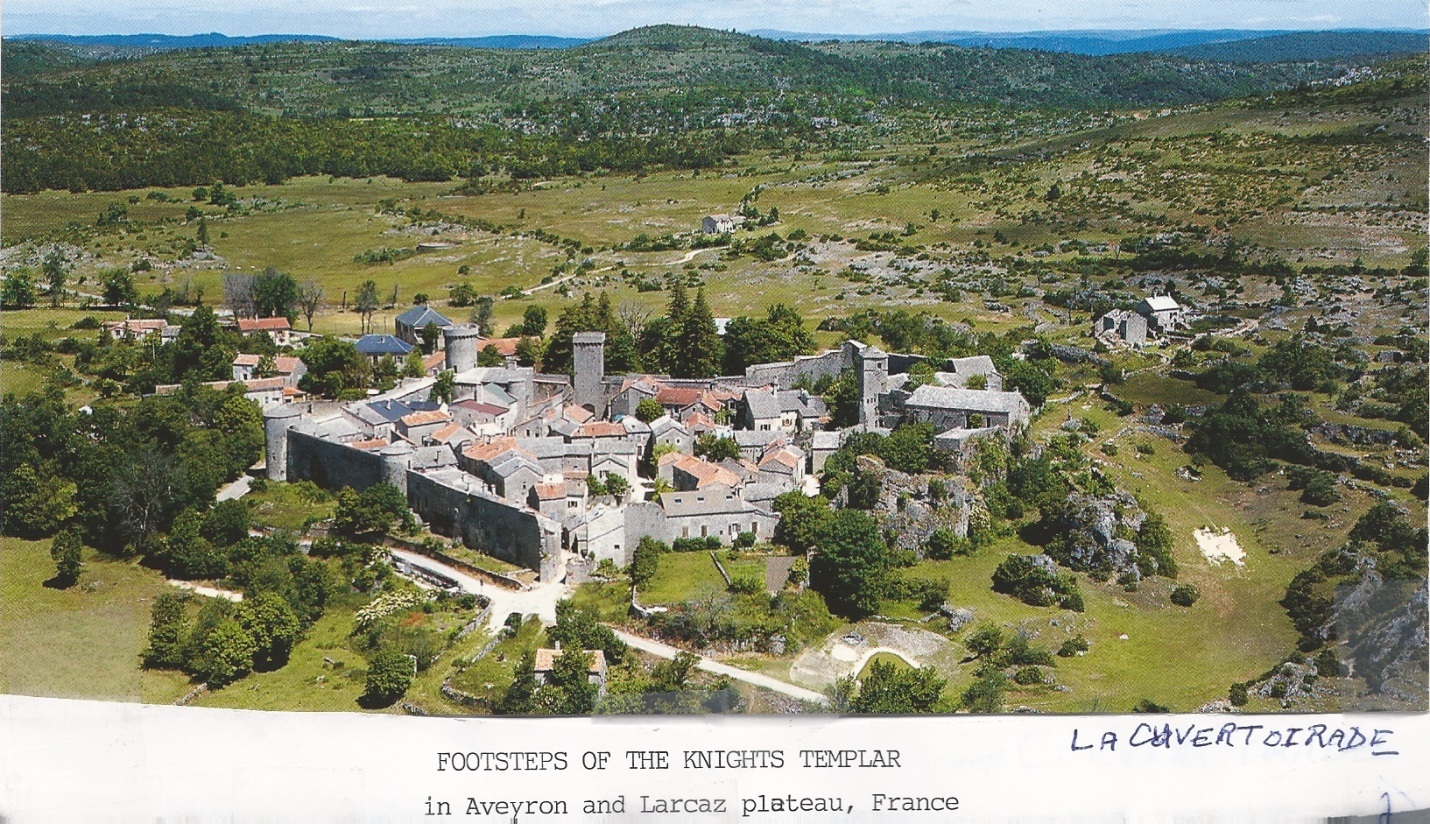
Templar Village

We left Montpellier, France on the A-75 highway to Paris. It was heavily packed with Sunday traffic and impacted with roadwork repairs. We exited for the first stop in tracking the Footsteps of the Knights Templar at the 11th century site of Covertairade. This beautiful walled city is set in the middle of pastoral farmlands with distant rolling hills. The entrance to the village is through huge doors that were barred from the inside during attacks. Then crossing a tiny plaza in front of a museum, we continued walking past both ancient and some refurbished houses and shops.

460891-la-couvertoirade-aveyron rebuilding[1]
It’s easy to spot the older buildings and the ones being refurbished, particularly windows with glass and some sharper edges on the roof lines.

The streets were narrow and graveled. We came to a lovely 12th century church adjacent to the castle/armory built on top of a ridge.
Fortress
This is the front of the castle/fortress with certainly sharper lines and the Templar Cross in front guarding the village. This height gave oversight of the stream and farmlands below…a very important factor when you live on a road that leads to the ports of the Mediterranean Sea.


Castle-fortress, particially rebuiltThis is the back of the Fortress and in those times, easily defensible!

Although these local Templars were originally concerned with teaching farming techniques and improving the livestock of the farmers, but roving bands of attackers forced them to also become protectors. Guardians and protectors of this village is what they did. They built basements for storing animals and food. And giant front gates.

France_Aveyron_la_Couvertoirade_05

The stones in the 2nd row are from the 12th century but a few of the roof tops and towers are not. The small openings in the walls allowed the animals to feed outside but were easily protected.

Some houses have already been rehabbed for cafes and artisan shops, and when we were there, one restaurant.

2 Street scene...Aveyron

The wares of a weaver were advertised on the flag above his shop and below were vibrant blankets, throws and scarves draped over tables and chairs. He said the government was selling these rustic structures cheaply and in particular wanted artisans, -restaurateurs, writers and the like to buy. There were two stipulations: the owner would remodel (plumbing, electricity et al) and would live there. The benefit being one could freely sell his or her wares. Since tourism was just beginning in this area, the weaver hoped it would become quite profitable.

Midi PapillionThe village agent recommended the hotel Midi-Papillon in Saint Jean-du-Drul and called ahead for us.


The lovely old Hotel Midi-Papillon was built next to a deep gorge.

le-pont-vieux, 12th centuryHigh wooded hills surrounded the village with a rough 13th century bridge crossing the river and a 15th century church at the end.

The Hotel fronted a small patio beside the gorge where we could partake of drinks, cigarettes, and coffee—but not much conversation due to the roaring water.

Hotel riverside Patio

After an excellent breakfast finished with coffee overlooking the misty gorge, we continued our Circuit du Larzac.

And that will be Sainte Eulalie de Cernon.

Au revoir!

2-17-16


Posted in France | 1 Comment

Caroline the Catalyst

I once spoke to a clairvoyant woman when I was 22 years old. She told me many eerie things; she spoke of past lives, told me I rarely ever live beyond the age of 28 because I prefer to live many lives so I live them short. But this life I would live past 28, and in fact during my 28th year of existence my life would, “Open up for me”. She said enough things that resonated true that I have always held this thought in the back of my mind since that encounter. But as of late it donned on me that perhaps there is some metaphysical law which did not allow her to use her ability to tell people their time of death. So she was hinting to me: 28 could be my end?

My Birthday is June 12th, I will be 27. And over the past two years as time draws closer to this age of 28 when I contemplate this thought of death there is a deep feeling that arises inside of me, a feeling that is not of my own self but something greater. As the saying goes: I feel it in my bones.

So over the last year I began living life as if I will be going Home soon. When one thinks of the hand of death as being so close they begin to ask themselves: What do I want to do before I go? Who do I want to speak to and what do I want to say to them?

At any moment someone you love can be taken from you. One day they are healthy, the next there is an accident or they fall ill and are gone before you have time act.

This is what I want to say to Caroline before either she or I go:

Caroline the Catalyst

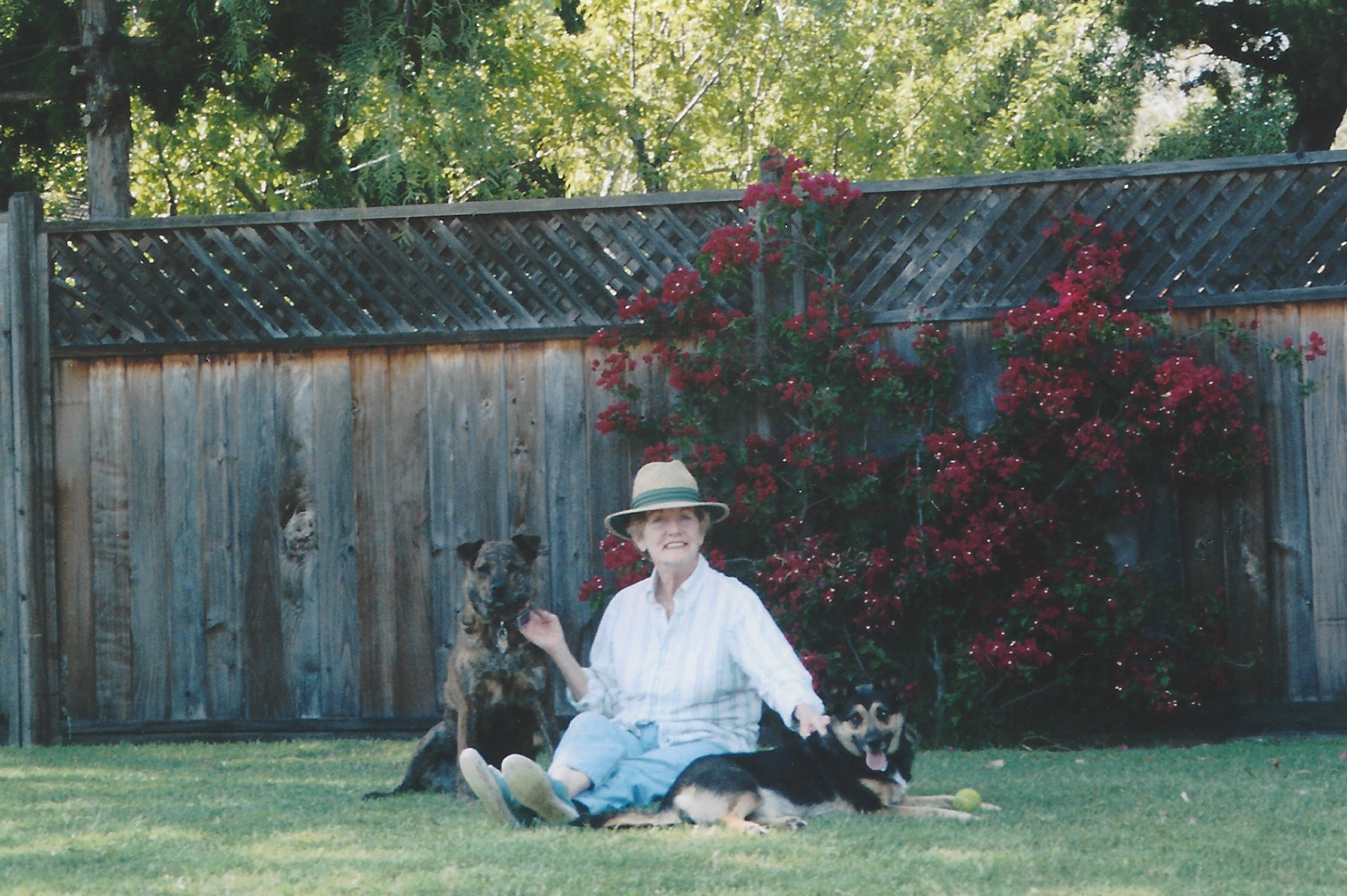
Caroline started off as my first employer, my job was to socialize her powerful and protective dog, Gamba, with children and people in general. I was around 10 years old at the time, it has been 17 years now and for over half of them it was just a job and Caroline was just my grandma’s neighbor whom I had the typical relationship dynamic between that of a child/teen to a non family elder. Neither Caroline or myself were very sentimental and didn’t show much emotion or affection to one another for anything beyond our work together.

In the 17 years I have known Caroline I have only hugged her once. That was about a year and a half ago when I wasn’t doing so well and I had an epiphany of how much Caroline has done for me, and unbeknownst to her, my family.

For me, she taught the fundamentals of being an employee; of having responsibilities and duties, dedicating yourself to something and showing up consistently and on time. While I was teaching the dogs to socialize I was learning to socialize with an adult outside my family. And she paid me, generously, which enabled me to enjoy the fruits of life and allowed me to pursue hobbies and interest that I wouldn’t have been able to if it hadn’t been for her funding. But even more importantly, Caroline did something for my family.

After the dog walk or sometimes before I would go to my grandmothers house, Caroline’s next door neighbor, to visit. Had it not been for Caroline I wouldn’t have been on Santa Clara Street every week, I wouldn’t have visited my grandmother every Sunday and thus I would not have grown so close to her. Because I ended up spending more time with my grandmother I got to know her better as a person, she got to be an influence on my life and I brought companionship and meaning to hers. As I saw her more often, week after week, year after year, I thought of her more and more. And when my family would go out to eat or celebrate something, or just go on a short outing to Morro Bay or some other location I started asking, “Why don’t we invite grandma?” We did sometimes, but not always. Jane could be difficult to draw out of her house and sometimes I feel she was just forgotten. But I couldn’t forget someone who I saw every week, so I keep pushing my family and her to come together. And I can say over time I successfully did so.

Indirectly, through her employment, without even knowing it Caroline was a catalyst for bringing my family closer together. For this, and everything else you have done and taught me, I love you.

Sorry for putting you in the spotlight, I know you’re not one for self glorification. Maybe I will get a second hug from this, I just hope it’s not your hands hugging my neck.

I would sign off as, “The grandson you never had” but you did and do have me.

See you at Mass sometime.

Kevin

Posted in California | Leave a comment

Final Journey through Turkey: Part 3 redo

Friday 6-21-12

The ride down the hills to Assos was long and hazardous but we made it and checked into our third floor room-with-balcony.

Only eight rooms had a view-with-balcony, which had a heavy overhang to keep out the weather and resembled a small watch-tower.

Walking the waterfront and the tiny village only took 30 minutes. Off to the pool…freezing.. .ha! The 7:30 seating for dinner offered minimal choices: fish or chicken. The food was good and the service excellent. Then the rains came down and we got to watch passing ships from our watch-tower.

Saturday 6-22-12

Breakfast overlooking the bay, with some clouds and choppy waves. We tried walking up the hill to the village above but only got as far as the crumbling but majestic amphitheater when it started to drizzle. The rain actually enhanced the appearance of this ancient structure but not the quality of the dirt road returning to the hotel. We had to step off the road when cars passed. The second time this happened we heard some noise from a fruit orchard and there was a herd of goats, chewing quietly, staring at us.

I whispered and they cocked their heads, moving closer, paralleling us along the fence fearlessly. Being unused to goats on the other side of a shabby fence, we walked quietly until the road shifted away.

Then, bravely, we looked back and missed their curiosity. Watching them chew made me hungry. Nearing our hotel, we stopped at Gazleme, a small restaurant with grape vines covering the overhead lattice work that kept us dry. Lovely lamb stew. Our hotel was filled with Turks. The only English spoken was by one receptionist. Our Turkish was meager but people were very hospitable.


Sunday 6-23-12

While crossing the Dardenelles, I noticed the many crumbling fortresses lining this most strategic body of water. More than 5 countries used the Straits to get to the Mediterranean, a vitally important access to commerce. From the looks of the many fortresses, it was not easy. We found Hotel Owa in the non-tourist town of Gelibolu and got a lovely large room. Our balcony overlooked the downtown and a very busy harbor. Our concierge recommended Ilham Restaurant for fresh seafood. We ate on the outside deck to watch the water action. Their special was grilled sea bass and it was excellent. Everything was lovely. . .except for the three kids screaming and running down the aisle.


Their parents totally ignored the disruption of all the other diners while they continued chatting with their guest. There was muted applauses when they got up to leave-they pretended not to hear.


Monday 6-24-12

After breakfast served by our friendly, English speaking host, we left for Istanbul. Stopping first in Sarky for a wine adventure, but again, no tasting, no tour, wine sales only. Very frustrating to my wine educated husband whose avocation is teaching wine appreciation.

Since I do most of the driving and Mike navigates, I asked for a break in a tiny village where we could park in front of the cafe. The travel books recommended the importance of car and luggage observation. Mike preferred to review the map route and remain in the car. I climbed the porch steps and asked for a cup of “chai” (the Turkish all-day-brewed tea). An older man in a worn sports jacket walked up and asked if he could practice his English. I smiled and nodded. He said his home was Istanbul but he Summers in this village. Two more men joined in and then a fourth. They spoke no English. Getting nervous I called for Mike to join us and the three additional men immediately left. The first man continued chatting for a bit. We have found that most Turks were very friendly but the 3 guide books I read did warn that the men could be overly “friendly” to fair-haired, light-eyed foreign women. As we drive off I saw 2 women fully arrayed in black standing at the kitchen door, glaring at me. One was drying her hands and the other holding (brandishing?) a frying pan.

The remainder of our drive to the airport paralleled the Mamara Sea, and it was beautiful. The international airport, like all others, was very confusing but we successfully returned our Sun car and they graciously drove us to our hotel, describing points of interest. They would pick us up at 10:00 tomorrow for a tour…no additional charge.

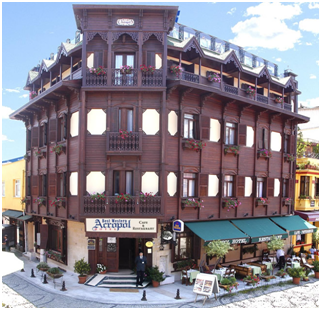
I had reserved The Hotel Acropol months before, and since they were not crowded, our concierge took me on tour of the available rooms. He offered a discount for #503 mini-suite; located on the top floor with a balcony that overlooked the city. It had a clear view of Haya Sofya on our right and the beautiful Blue Mosque on the left. We looked over the main street of Old Town. We ate an excellent dinner at the nearby Suites Hotel on the outdoor patio and had an interesting conversation with a Swedish couple at the next table. Afterward we enjoyed a glass of wine in our hotel’s top floor restaurant, watching the container ships cursing through the Maramara Straits. This had been going on for centuries. What an amazing vista.

Tuesday 6-25-12

Our tour guide Acif picked us up at 10 and we walked the cobbled stone streets to Haya Sofya. Mobs of people were waiting in line. Using his “tour guide pass”, Acif swept us through. Haya Sofa was enormous and overwhelming. The bright tile work, colors and the height and breathe of the ceiling vaults were incredible. The building corresponded to, but predated St. Peter’s in Rome, and was the headquarters for the Greek Orthodox Church for the Eastern end of the Greek Empire.


Next we went to the Blue Mosque. The Sultan Ahmet donated this whole area to the neighborhood community in the 15th century: the Mosque, a school, the hospital and an alms house. There were masses of people waiting to enter but our guide flashed his pass and we moved to the head of the line. We bagged our shoes in plastic, donned slippers to walk into the carpeted building. Acif led us to a corner and showed us the typical Muslim prayer: face wipe, ears, hair and chest with prayer to give “comfort” to the prayers. Then he knelt on the carpet saying incantations while resting his head and arms on the floor. We were not the only ones who enjoyed watching him.

Then we visited the Turkish Museum of Art noted for its extensive array of carpets. The old prayer rugs were threadbare from the knee indentations over many years, but had worn beautifully. All women were required to weave a “marriage” carpet before the wedding which could take up to five years of work. This was considered a retirement necessity and when sold 40 to 50 years later could bring a good bit of money. The ones I saw were priced from 50,000 to 200,000 thousand dollars… and they were exquisite. Strangely enough none of the museum’s female manikins had faces. Just skin colored material stretched over the head…and totally blank. After awhile, I could not look at them.

Then our guide escorted us to a carpet store. They served us Chai and presented a remarkable history of Turkish carpets. There were sample rugs that had been laid on sand and trampled by goats, sheep or cows before they were deemed worthy to sell. They were remarkable. There were samples of “marriage” carpets that could only be worked on when the weaver was in a “good” mood (Beats not tonight honey I have headache). Some of the carpets were woven with silk and were exquisite. I asked for prices but the salesman said “not yet”. At the end of the presentation he asked me to pick out a rug I really liked. I did. The price was $13,000. I said I have a headache.

They were very disappointed. They dropped the price. My husband said we would have to talk about it and would let them know. Although Acif was disappointed we did not purchase anything, and I understand why, my husband gave him a very nice tip for the wonderful and informational tour. Later we walked to the Grand Bazaar. Old buildings connected by canopies covering alleyways and went on for miles. Shops, small stores and many individual stands selling anything and everything to the hordes of people wandering through.


We ate dinner across from our hotel at Albura Kathisma Cafe. Excellent lamb dish. We took the remaining wine from our room to our hotel’s top floor restaurant and again sat overlooking the sea of Marmarna. Passing ships, setting sun burnishing the waves. Magnificent.


Wednesday 6-26-12


After breakfast, on our last day in Istanbul, off to see the Topkapi Palace. Built next to Haya Sophia in 1560, it is an opulent campus with four courtyards separating the individual palaces. It seemed like there were thousands of people. Because of the crowds, we skipped the palace-museums and walked all -the way to the end.

And it was worth it. A spectacular view of the Golden Horn, the sea of Marmara and the bridge across to Asia. A small breeze blew and the ships moved eternally through the straits. (see picture at end)

It was closing time so we walked to a cafe just outside the entrance for coffee. Watching the hoards rush to the busses, I wondered how many different nationalities we were seeing.

Time to pack up and get ready for our 3:30 AM airport pickup tomorrow for the 6 AM departure for Amsterdam and the USA. After organizing our luggage, we walked down the street to Premier Suites again for dinner on the outside patio. Back at our hotel in our lovely suite, I stood on the balcony looking at the night lights on Aya Sophia and the Blue Mosque. The street noises were soft and the human voices musical.

Good night Istanbul! These two Independent Travelers would only come back in our memories.

Posted in Turkey | Leave a comment