Part 2 of An Ancient City……and an a Exchange Student

The next morning we had breakfast overlooking the central garden and swimming pool, finishing with  coffee by the poolside.

La Residence De France1

Although we had met with Kate and her family over the years, each time was a new stage in all of our lives. We spent the day wandering the cobbled streets. One of the churches we visited had a large group of 12 year olds clamoring with joy over their recent Confirmation Ceremony.

La Rochelle2

We also saw part of the remaining 11th century

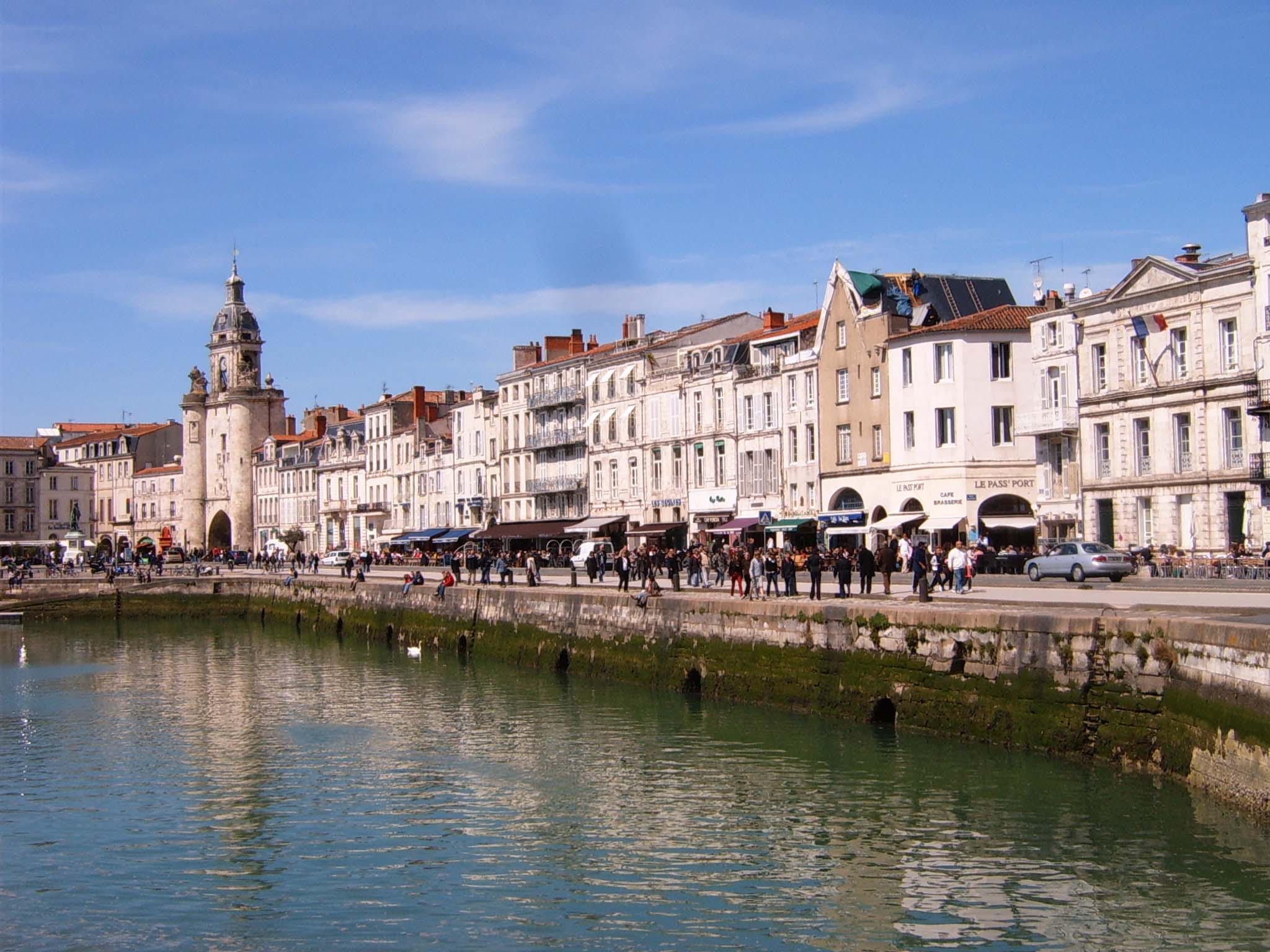
city wall by the Royal Port Entrance. 5:45 PM

and we lined up with thousands of others along

the left side of the Harbor for  “The Red Bull

Clift Dive” of 120 feet. It didn’t start until 6:10

when the incoming tide would top, enabling the

divers to dive another day.

La Rochelle3If you look closely you’ll see the green algae growing along the bottom. The incoming tide needs to cover this to insure the health and physical well-being of the participants.

We were facing the taller dive tower with a good view of the divers’ start but were blocked from the finish by the crowd. When each diver stepped to the platform, the huge crowd became absolutely still. They remained silent until the diver landed and the announcer said “He’s O K”. Then enormous cheers erupted. There was a longer wait after a  summer-salt….but not  a sound until “He’s O K.” . The cheering was quieter. I felt he wasn’t OK.

After dinner, Kate helped our concierge make reservations for the Paris Mercure  Hotel. Close to the airport, its location would facilitate our early departure on Delta’s flight to San Francisco the day after. Then we adjourned to the lounge. Mike ordered a bottle of Champagne for our farewells.

This is a picture of the three of us toasting and, unintentionally, blocking the view of a lovely  log fire. Actually, our backsides needed warming.

Exhange student

Posted in France | 2 Comments

La Rochelle

A Tale of an ancient city and a 17 year old Exchange Student

La Rochelle

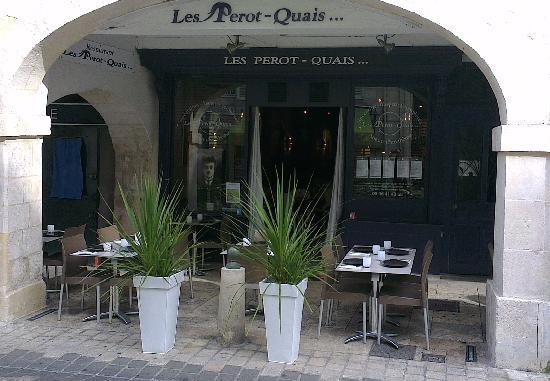
We arrived in La Rochelle, France around 2 and hungry. Inadvertently I parked in a “Police Area” the only lot with spaces, and across the street from a handsome restaurant. The patio, due to intermittent rain, was empty and the inside, crammed.

les-perot-quaisThe special of the day was “Rochelle Burger”. I requested well-done. It wasn’t. I told the waiter I had asked for “well-done” and he said it was. I cut the bloody meat…he apologized and said he would take care of it immediately…and brought me  another entire meal exactly the same. The French fries and salad were excellent.

While I had coffee on the patio, watching for a policeman to approach our car, Mike walked the narrow, one-way streets to find our Hotel De France and it was nearby WITH underground parking! Excellent for such a very walkable city. A lovely hotel and a lovely room.

La Residence De France2We met up with Kate Van Dessel, our  lovely Belgium exchange-student from 24 years ago. La Rochelle was on our way home and an  hour’s flying time for Kate.

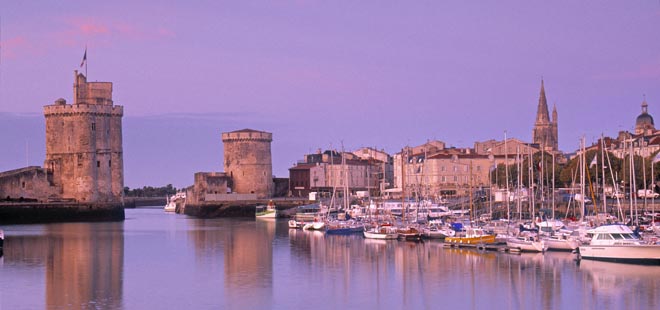
We had a glass of wine beside the fire-place in the lounge and planned our stay. This is an old city, 11th century, and beautifully maintained. One of France’s major ports became the biggest yachting center on France’s Atlantic coast. (See picture below)

Kate was 17 when she arrived to spend her “senior” year at our  local high school. Our daughter was a junior and we felt the cultural exchange would be good for her. We had no idea of how it would impact us. Living with her for a year, eventually meeting her family, future husband and learning about Belgium  changed our lives. We began to travel.

La Rochelle4

That evening we walked the cobbled streets to the Portside for dinner. Our Concierge recommended Chez Andre for their Lotte, also called Monkfish, and Sea Devil, served with risotto. Excellent…as was the wine Mike paired with it. After, we had coffee outside overlooking the harbor.

La Rochelle1

Kate brought us up to date on her family and on her travels as an executive VP for D.H.L International. We related episodes from our recent trip to Israel.

People nearby were talking about a “Special Event” happening here tomorrow between the 2 massive harbor towers.  Later our concierge  filled us in on the “Extreme Event” of the “Red Bull Cliff Dive” set for 6pm the next day. “A must see” he said.  And we would.

To be continued in 3 days…

Posted in France | 1 Comment

Caesarea Israel‏

Korazim Park

This picture is the entrance-or exit  to Korazim National Park which includes  all of Caesarea.

We saved the Treasure of Caesarea for the last, and it was spectacular. A Saturday with good weather equals crowded. The area was so spread out that the crush  didn’t matter.

This next picture shows the original (excavated) port area. Herod the Great, in 29 to 22 BC, built this magnificent city on the site of an ancient Phoenician port and dedicated it to Augustus Caesar. The Crusaders, in the 12 th century, revitalized the city as a major port.   In the late  13th century, the Mamelukes destroyed all of it. Caesarea was then reclaimed by the sands   until the ruins were found in the 1940’s. It is now one of Israel’s major Archaeological Sites.

Caesarea

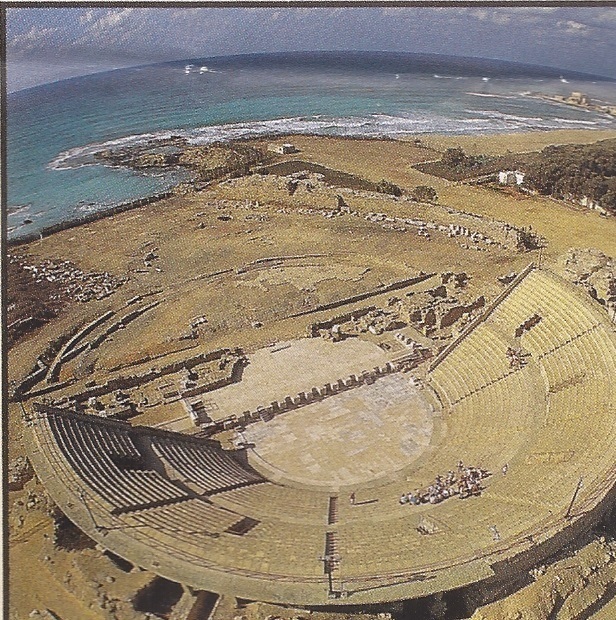
Looking more closely at this second picture, you get a good overview of the excavated sites. The original port is submerged.  If you look to the right, you can see the long, curving arm that protects the sunken port. There are choices to view this: swimming/scuba diving or seeing the films. We chose the movie which included the port foundations and parts of sunken ships. Excellent! Finally, looking straight ahead at the same picture, the Roman Amphitheater looks like a brown donut.

Amp2

This is a more defined view of the fantastic job the Romans did on the 2nd century amphitheater.  Now, fully restored, it accommodates over 4000 people  and hosts operas and concerts. Music…..with a view over the Mediterranean. What a magnificent site.

Next we approached Crusader City and the church.

Pamphlet3

The deep ditch in the foreground is the end of the 11 mile aqueduct that Herod the Great commissioned to carry water from a nearby mountain.  The aqueduct was built on arches that allowed for a constant influx of fresh water to the city. Magnificent feat! Above the aqueduct is the side view of the temple of Augustus and the Crusader Cathedral which is still being excavated.

Cathedral2

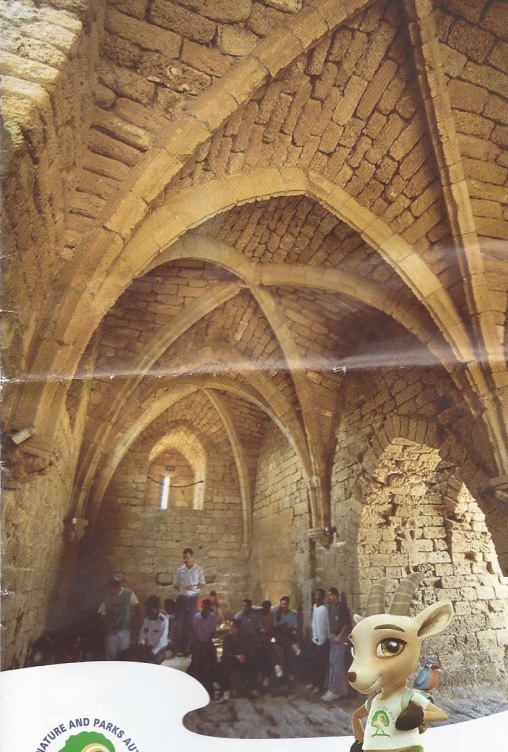
This beautiful, vaulted Cathedral, although smaller than present day standards, is exquisite. The building was dedicated to St. Paul and built on the site of an earlier Byzantine church.  Not crowded inside, only the waves were heard. And no one spoke. Caesarea, backed by the blue Mediterranean Sea, offers the world its staggering, ancient ruins. Successive  phases of occupation have left a treasure trove of archaeological  remains. And all this began in the 4th century BCE.

Posted in Israel | 2 Comments

Jerusalem: Part 3

Saint Mark’s Church

Jerusalem_dormition_abbey_4There is conflict about the original site of The Last Supper. St. Mark’s Church is acclaimed by some scholars as the true site of The Last Supper. The ceremony was thought to be in a small cellar room of the home where Mary, mother of St. Mark, the Evangelist, lived.

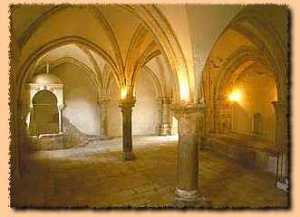
Last SupperBut other scholars say that this site, (see picture here) later reconstructed by Crusaders was where Christ ate the last meal with His Disciples. Beneath this hall is a very small chamber venerated as King David’s Tomb. In the 15th century David’s Tomb was incorporated into a Mosque and was one of the most revered of Jewish Holy sites because David was considered one of the True Prophets by the Muslims. Consequently, this  Last Supper site may have been preserved by the tomb beneath.

Next on our agenda is the Holy Sepulchre Church. This building includes Christ’s Crucifixion, Burial and Resurrection and therefore the most important site in Christendom.

Sepulchre Church

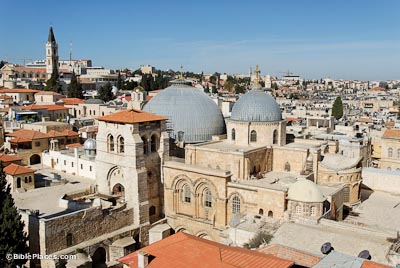
The size of the church now is huge compared to the foundations of the original. There was destruction by attackers, later a big fire and finally an earthquake. I feel that the reconstructions helped by allocating 6 chapels to different denominations.

Jerusalem_holy_sepulchre_church

This Chapel is one of the many in this complex including: Armenians, Greeks, Copts, Roman Catholics, Ethiopians, and Syrians. I did not go into Christ’s Tomb because over 200 people were in line and the limit was 2 minutes per person. Just being there was enough.

After lunch, our guide Roy drove us around the outside of the Old City for a view of the Separation Wall.

Seperation Wall

This barrier is certainly more than a symbol of the division between the Jews and the Palestinians. Israel created this security barrier to restrict movement of the Palestinians into Israel. They can only enter with prior authorization and going through check-points. And these generally don’t engender friendships.

Western_Wall_PanoramicThe Western(Wailing) Wall is Judaism’s holiest site and a permanent place of worship. The huge base stones were from the time of Herod the Great in 35BC. During the war between the Romans and Jews (70 AD), the 2nd Temple caught fire. The remaining, original part of the Temple became the site where Jews came to lament their loss.

The Western Wall Plaza is a large open-air synagogue observing daily services or special events of the Jewish faith. Some conflicts do arise over issues such as the size of the men’s and women’s sections (see extreme right side) and where non-orthodox groups with both sexes participating can meet.

This Wall is the western side of what is presently the Temple Mount—-which is one of the sacred sites of Islam. And this is but one incident of the complexity of Jerusalem.

Look at the lower left of the wall- (the archway facing forward), partially blocked by people, Wilson’s Arch. (named after its 19th C  archaeologist) and  this arch is the entrance to the Western Wall Tunnel.

Souk Tunnel

To explore the Tunnel, you enter here, but to reserve tickets, book well in advance.

The Tunnel follows the base of the outside wall of the Temple and is 60 plus feet below the present street level.

OLYMPUS DIGITAL CAMERA

The chamber is very narrow, single-file only, and parallels the giant stone slabs placed there in 35 BC by Herod the Great. It is also claustrophobic. The path rises upward steeply with intermittent staircases. We were allowed to touch the huge stones used for the base of the wall, all shaped and fitted smoothly together in 35 BC. With only the use of basic tools.

At the very top, we entered a large room that was a cistern built at the same time as the walls.

Above the cistern was a flat rooftop  with various openings and channels to funnel the rain water into the cistern and, from there, the water was distributed throughout the system. (Especially handy when attacked!)

Since this was our last day in Jerusalem, we ate on the veranda of the executive lounge and tipped a glass to The Dome of the Rock. A suitable ending to a marvelous stay.

Jerusalem1

Posted in Israel | 2 Comments

Jerusalem: Part 2

JERUSALEM         Part II

Our guide led us through an amazing conjunction of Souks to  arrive at his reserved restaurant located in a small alcove that seated no more than 15 people. The owner scooted diners around to get us a table,  then led us into the kitchen to choose our meal from the bubbling pots. And it was delicious!

El Takiya Street


On our way to the 1st century Roman Road , we passed El Takiya Street. Narrow and stepped,  it contains some of  the city’s best examples of the 14th century  Mameluke  architecture. Arches, domes and oriels were favored by the Mameluke builders and this picture entices one to walk through the arch and down the steps.


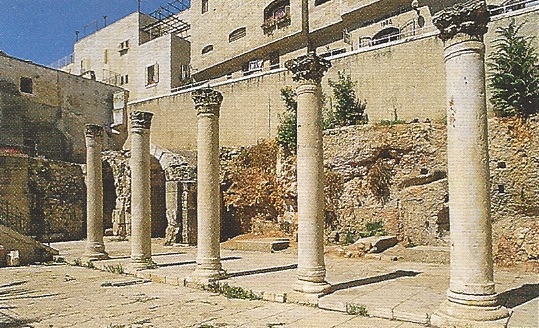
Finally we arrived at the “CardCardoo”, the 1st century Roman Road that originally ran north/south through the city of Jerusalem.

We stood at the upper (back) side,  looking down at the columns and the broad, porticoed  pavement with the remaining arched door- ways of the  ancient shops—-all about 2 floors below the level of the present city.

On to the Citadel/Tower of David.

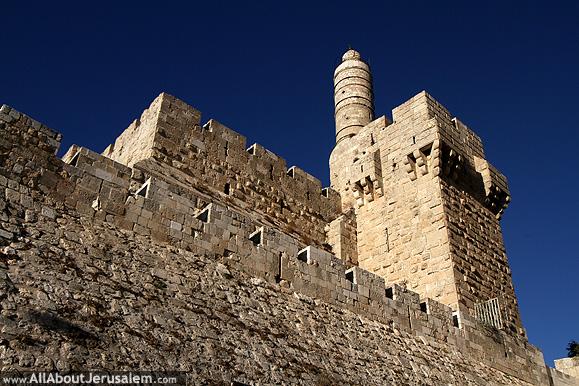
david_citadel_wallsThis structure is the most recognizable landmark in the Old City . It was the main line of defense and rebuilt by each generation of invaders. And there were many of those!

Like most fortresses of the Middle Ages, the Citadel  was capped with a surveillance  walk originally built for defense.

Ramparts


Now the touriHerodian Streetsts  can walk the whole circuit with wonderful views over the Old City. At one point we had a partial  overlook of Herodian Street.


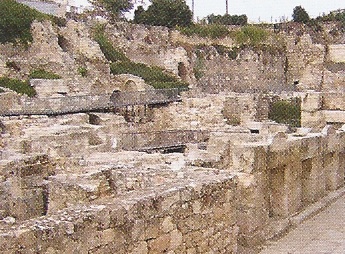
Dating from the time of the Second Temple, it was originally lined  with shops. It’s presently being reconstructed  but if you look at the lower right corner, there are 4 small doorways that have been completed.

To be continued JERUSALEM part 3 soon…

Posted in Israel | 2 Comments

Jerusalem: Part 1

                JERUSALEM

It seems frivolous to discuss  hotels at the beginning of a review of this fantastic city, but it is important to choose the best location when spending 4 days. It needs to be close enough to walk to sites and convenient for breaks during/after excursions.

The Inbal Hotel was a good choice.

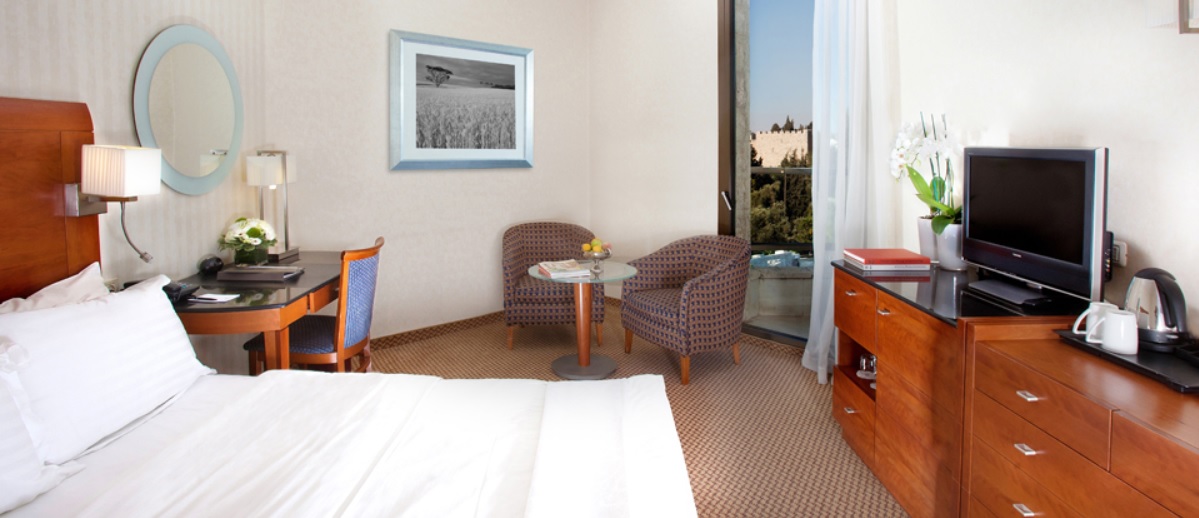
Inbal Hotel Lounge2 Lovely room on the 8th floor,   with a balcony overlooking a slice of the Old City , and 2 lounge chairs. (These are important factors when over 70.) Hotel Inbal PoolSwimming unkinked those walking muscles and the terry-cloth robes facilitated going and coming comfortably. The hotel was expensive but we regrouped some losses with the use of the Executive Lounge that came with rooms on the 8th and 9th floors : light meals, spirits, coffee were always available gratis.

Inbal-exacutive_lounge

And we spent all sunsets up here.

When we arrived at the hotel, our guide Roy Brody  was waiting. Over coffee, he laid out our strategy  for the next few days. Being both a Brit and an Israeli with twenty-five years of guiding and an art history degree from L.A.—he was perfect for 2 Americans. He had a remarkable understanding of what we wanted to see, and since we were 70+, how many sites. And we were off to The Damascus Gate!

Damascus Gate

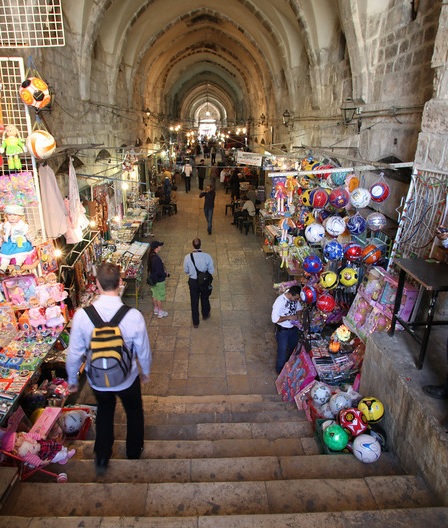
This is the most monumental  and crowded entrance to The Old City. Roy steered us around the right side of the arch, over the plaza and into the Souk. This covered and narrow Bazaar wound between the buildings and was packed with small, appealing shops on either side.

Souk Market4

Crowded, noisy, people coming and going or just standing still…it was delightful. These Bazaars  are a fascinating view into the thriving Arab Community. This El Wad Street with its stone arched walls and ceiling where any empty space, nook, has been converted into a shop or restaurant. The wonderful odors of spices, fruit and cooking permeate the air.

To be continued on 8/18…..

Posted in Israel | 2 Comments

Tel Aviv: the new Face of Israel

Second Entry

Tel Aviv3

Arriving at 5pm in Tel Aviv, through Security and into a rental car, we dashed to our reserved Lusky Suites Hotel with the sun-lit Mediterranean Sea and the promenade viewed from our balcony.

Tel Aviv4

Tel Aviv was created in 1909, when the Jewish National Fund purchased land among the dunes north of the old Arab port of Jaffa and named it Tel Aviv “Hill of the Spring”.

While not a beautiful city in its self, its rebel but friendly attitude and vitality are most appealing. Dinner that evening, overlooking the Mediterranean shore, was alive with people of all ages and many cultures, walking, sitting but most of all, socializing, along the promenade.

With only 2 days here, we planned the first for a walkabout of the Bauhaus buildings which received UNESCO World Heritage status in 2004. This was a pre-Nazi German architectural style of the 1920’s and 1930’s. The over 4000 Bauhaus buildings have earned Tel Aviv the nickname “The White City”.

Building2

As an architectural form, the buildings are based on functionality rather than glamor but the elongated balconies and rounded corners vastly appealed to me. Some of them are sensually appealing and I wanted to run my hand over them.

Building4

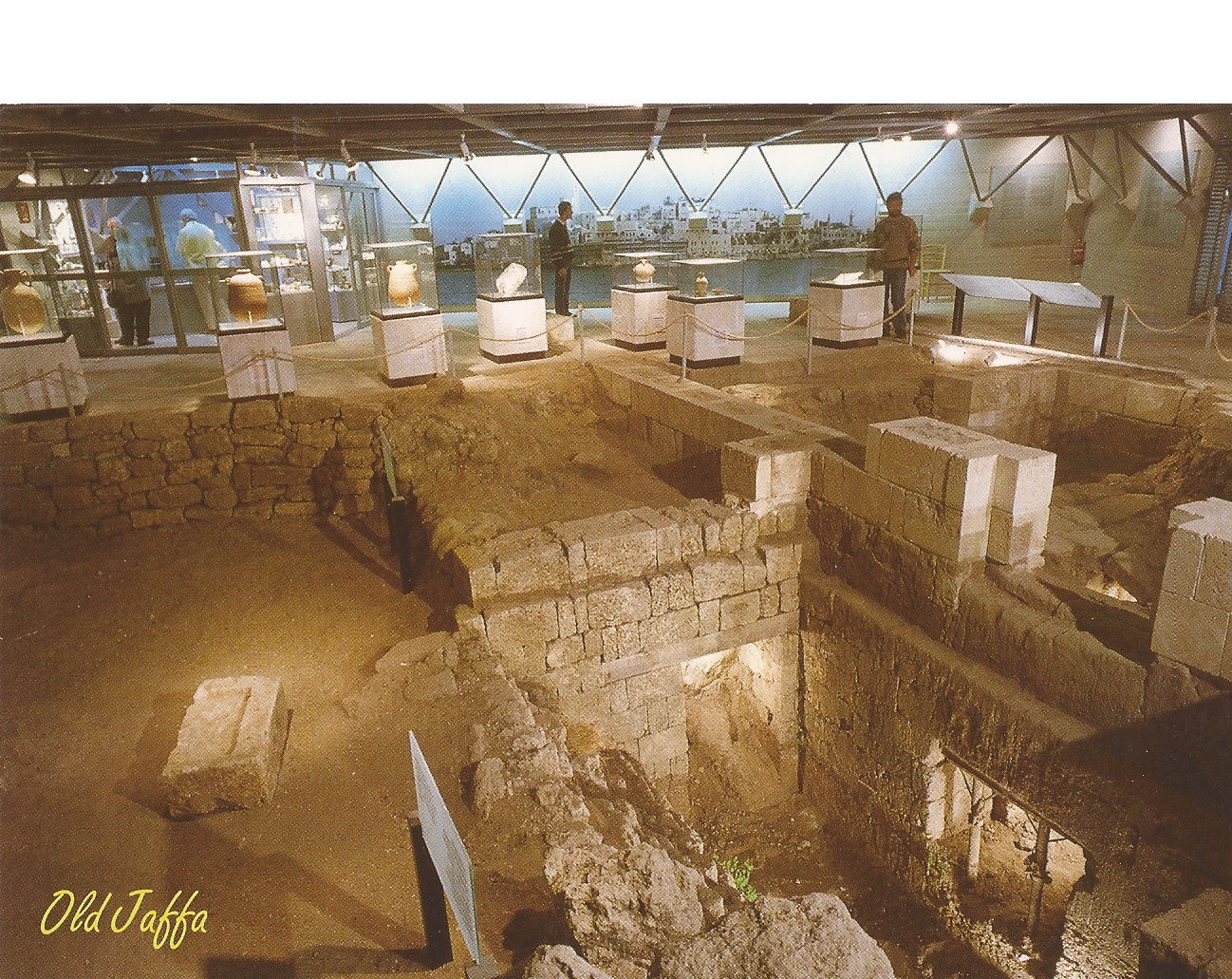
THEN OFF TO JAFFA, one of the most beautiful ancient sea ports in the world! According to to the Bible, Jaffa was built after the great flood by Noah’s son Japheth.Old Jaffa

Remains have been unearthed dating back to the 20th century BC ,  establishing this site as one of the world’s oldest ports. After a decline in 1948, it revived as a center for arts, crafts and dinning. We can vouch for the food, sea view,  salty breeze and the beautiful antiquity of this ancient site.

We found the Visitors Center on the main plaza just in time for the “English” tour of the “Underground” . Down one level was a museum with many relics: statues, working implements, part of a fishing boat and the like from hundreds/thousands of years ago, all excavated from from this site. Our guide told us who used them and when. Unbelievable.  How many cultures passed through and left their mark??

Old Jaffa2Two stories down we found the on-going excavation of a Greek village. The stairs took us down-and-around  the walls and room of a typically ancient house opening to a section of the forum and a water well. The excavators were not the least bothered by our passage. The guide said they had many more levels planned for digging. (That’s probably why the workers were smiling!)

At the end of the tour,  we were led to an enormous circular viewing screen. A marvelous 3-D video of the history of Jaffa was presented. I wanted to see it again but our guide said another group was entering and another language would be used. (Dam)

Hot and tired, we headed back to our hotel. Later we walked to an outside Kosher restaurant overlooking the Mediterranean Sea  and sipped an excellent wine.

Tel Aviv

Posted in Israel | 3 Comments

Men In Black

The Cult of the Ultra-Orthodox Jew in Israel

The first entry on our recent trip to Israel.

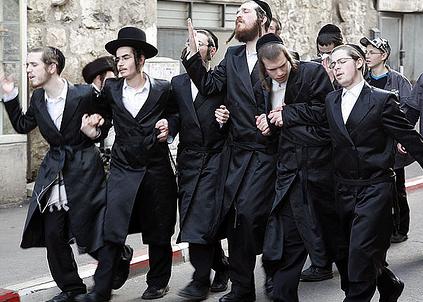
We started in Tel-aviv followed by Joffa and Masada….but more on those later. On our first day in Jerusalem I discovered a disappointing aspect of this “City of many Cultures” when our guide took us to the fantastic Souk in the Old City for lunch.

Souk Market 3

The narrow stone-arched passages had numerous small shops opening to the central corridor with throngs of people walking hither and yon. Our guide, Roy, was leading, followed by my husband Mike and I tagged at the rear. Ahead of me I saw 2 men spread to 3, all dressed in Black including hats, and heading straight for me. The man in front of me deliberately charged into me (although I did get my elbow into his gut) while the shop keeper grasped my arm to keep me from falling. The man I hit turned, snarled, and spit at me.orthodoxjews

Afterward our guide warned me to avoid these “Men in Black” because some of the Ultra-Orthodox Jews believe they are the “Chosen” and own this country. In my view point it seems that they despise foreign women as being not “Chosen” not male and not dressed in black!

Men in Black


Naturally, being somewhat paranoid, I began to watch for these occasions and develop defense mechanisms. Some of my reactions worked. When seeing several men, in black, heading directly for me, I grabbed my husbands arm and steered for them. That worked.

I did not have this problem with any other Culture, only the “Ultras”. The sounds they made also disturbed me:: when 2 men were behind me trying unsuccessfully to push past, they would snarl and then spit. One such time I turned and said “God bless you.” That also worked.

Israel was wonderful, which I will write about later, but I had to get rid of this “Men in Black” irritation first.

Last, but not least, I relieved some of my frustration at the Tel-aviv airport when we were leaving. While waiting for our flight out, I went to the “smoking room”. As I approached the large, glass entrance doors, there were 2 men standing just inside heading out . They looked at me and stood waiting for me to open the door for them. Smiling broadly and speaking loudly I said “Gentlemen, please let me hold the door for you!” A number of people looked and many laughed. The first man snarled at me but, the second paused and said “Thank you.” A small, but nice step in the right direction, It never pays to “mess” with a retired high school teacher…we’ve seen it all.

Souk Market

Posted in Israel | Leave a comment

Footsteps of the Templars Part 2

SAINTE-EULALIE DE CERNON
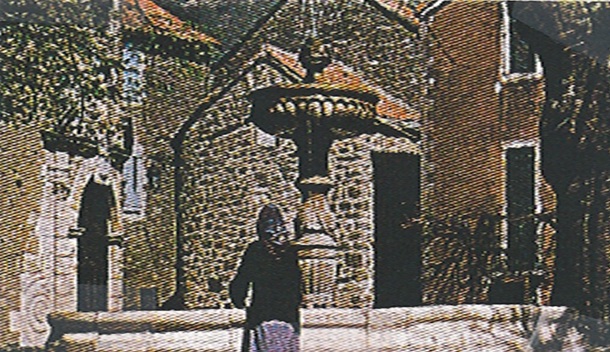
Entering the site originally built by the Templars and expanded by the Hospitallers were 3 floor buildings surrounding a large open plaza centered with a fountain. (see picture) Directly across from the fountain and adjacent to the church was an information center where English was spoken but all the pamphlets were in French. Our abilities with French extended to reading menus, reserving rooms and wanting directions to the bathroom.

Mike’s extensive international wine vocabulary had not yet been necessary in the Laraiac plateau—but there is always hope! Plenty of wine to drink but no local wineries where one could learn about the terror and varieties of grapes used in the process.

St. Edlalie was a working farm town and only just beginning to encourage tourism.

The Templars built the north wing, including a Romanesque Church and the granary tower but the Hospitallers expanded the village in the 15th Century adding a good deal of charm to the austere walled town. The church was typically dark with a single aisle to the alter but the sunny and beautiful plaza beckoned. Passing a lovely stairwell, we walked to the only open side of the plaza where we looked over the low wall and down the valley to the surrounding hills, Some Commanders and soldiers stabled their horses at the nearby site La Cavalerie while residing (with families?) in Sainte Eulalie.

Sitting, drinking espresso, (of course there was a cafe) in this sun-lit bit of antiquity allowed us to envision what life was like here in the 11th through 17th century… and what it is like today as a working farm village. When we left around noon, there were 2 more cars in the parking lot.

VIALA DU PAS DE JAUX
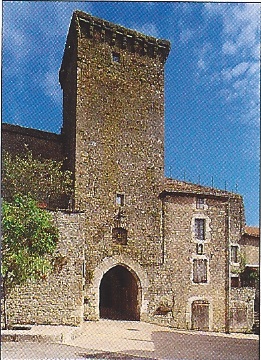
This small village is about 8 miles from Ste, Eulalie, along the Circuit Larzac Templier et Hoapitalier route. There was no question that we bypassed Roguefort as the smell permeated the air for miles.

A five story rectangular tower (see picture) dominates this town surrounded by cultivated land and sheep-walks. The tower was built by the Hospitallers in the early 14th century to safeguard the villagers and became a refuge for those displaced from town homes by various conflicts with outsiders or among themselves. Its roof terrace gives oversight to the immense Causse beneath. As we got out of the car we were stampeded by a large flock of sheep following a shepherd driving a tractor. Two hardworking and beautiful Border collies kept the animals tightly knit as they followed the shepherd down the road and into the hills. As urbanites, we were mesmerized by the sight. We also had to watch where we stepped crossing the street.

Vila Du Pas . .continued

Adjacent to the tower was a Tourist Information gift shop… beautifully rehabbed inside what was a rock cavern: the original basement of the barn above. Not only did the young women speak English, they had excellent brochures and travel books in our language! (Not to mention postcards and knickknacks… several of which are hanging over our fireplace).

There wasn’t much else to see around this site but this gorgeous shop made up for it.

SAINT-JEAN D’ALCAS  Afternoon of 8-2-12

We parked just outside the arched stone entrance to this walled city. There was only one other car in the lot. The rough flattened stones of the main street, only slightly smoothed since the 14th century, but were too rough for modern cars. The first floors of the buildings had the same rocky floors. This was the last and the most attractive hamlet of the Circuit.

The Abbess of the neighboring Cistercian Abby not only oversaw the construction of the village but also ran it for over 20 years. The Abbess adjudicated any problems that arose among the townspeople.

We found a few of the small stores open, they were the size and shape of monastic cells that had been joined together with rocky floors, walls and beamed ceilings.

There were small homes and apartments being rehabbed for sale or rent (much like the other sites) and various shops and cafes beginning to take shape. Saint John was a large, squared, walled village with one main street. In the center was a surprisingly big building with a wide glass entry and passage through the middle. On the right a modern restaurant (closed today) with elongated windows and a carpeted floor. The left side of the walkway supported several rehabbed offices/stores, closed for lunch, much to our regret.

The small single-aisle handsome church was similar to the others on this Circuit: elegant in its simplicity, foreboding in its darkness.

The Information lady recommended lunch at a lovely old hotel restaurant back at Tournenire. We drove through Roquefort this time, fascinated by the Caves in the hillside where the bus people were lining up to enter and by the overwhelming odor of Roquefort cheese. A few miles beyond we spotted the hotel on the left and found only two cars in the lot.

Looking back, I think we would have spent the night in this lovely old hotel in Tournenire and, after eating, popped over to visit the Roquefort fort caves. All of these villages could have used a little more time visiting.

The large reception area had been converted to a restaurant with a glass solarium in front. The antique bar also served as the reception desk.

We chose a table by the window and adjacent to a huge bird cage containing a large multi-striped parrot who chattered throughout our meal. When we responded to him, he shook his feathers and turned his back. The roast lamb special was delicious.

When we left around 3, the parking lot was full.

We decided to head on to Millau and see the new cable stayed-bridge. We found the Chateau de Creissels Hotel, just across the river from Millau, and got a room with a balcony overlooking the river and the town but, most importantly, giving a clear View of the cable stayed bridge with the magnificent 7 pylons that resembled huge sails. They changed as the sun moved toward the West. Breathtaking!

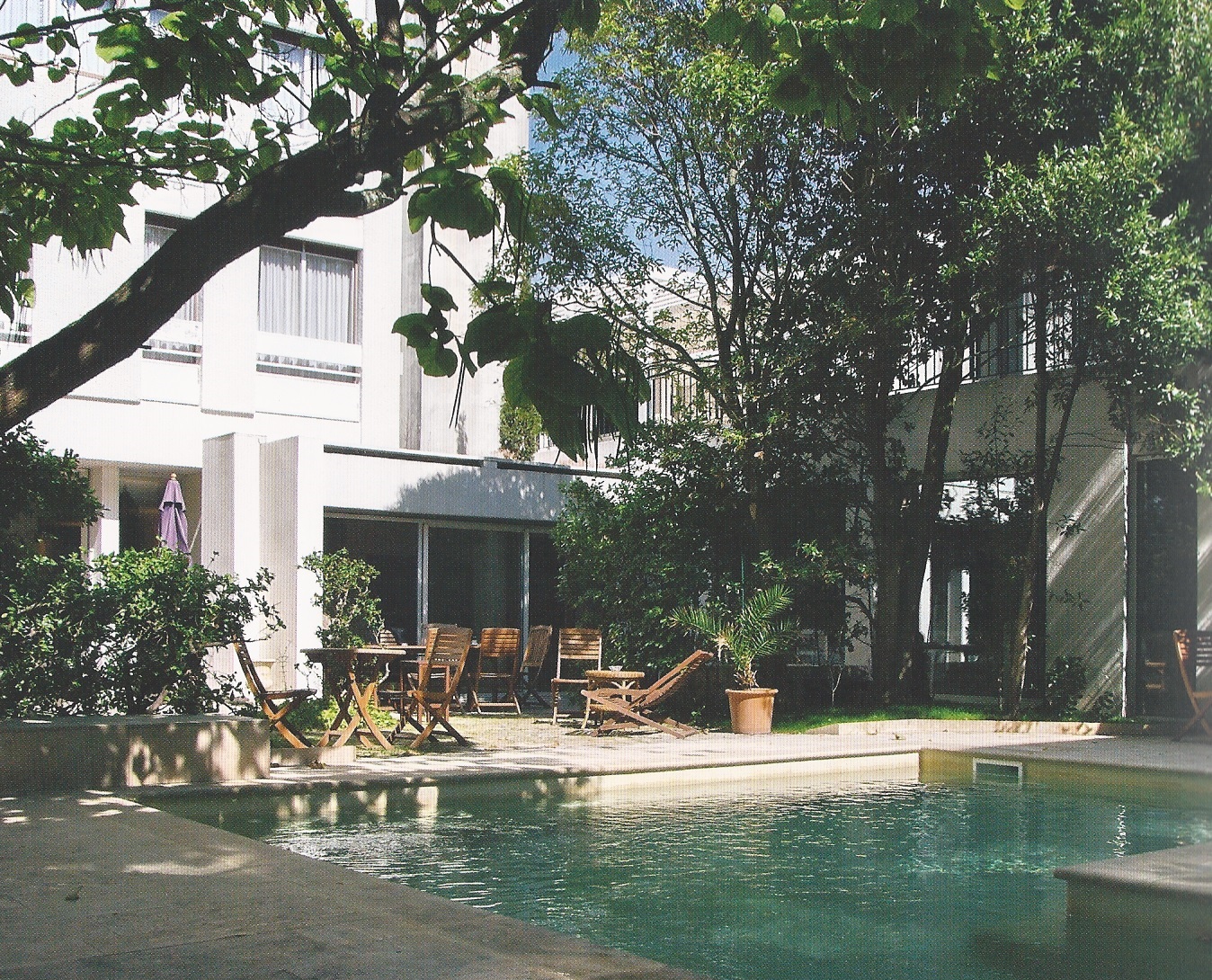
The hotel itself was a very old estate converted years ago. We had driven through the gates into a lovely  green and multi-treed yard where cars park hither and yon under the trees.

The regal reception desk was located between the breakfast room and the elegant living room beyond which was a poolroom—cum—library. That night we ate in the formal dining room, actually below the house on the ground floor overlooking the bridge and the river. We chose the balcony with large stone arches through which we could watch the changing light on the “sails”.

The meal was excellent. Champagne toasts were in order for the end of this segment of the “Footsteps of the Knights Templar”.

We probably won’t be this way again…but there are few adventures that are in your heart and you revisit in your memories frequently… and this was one of them.

MILLAU
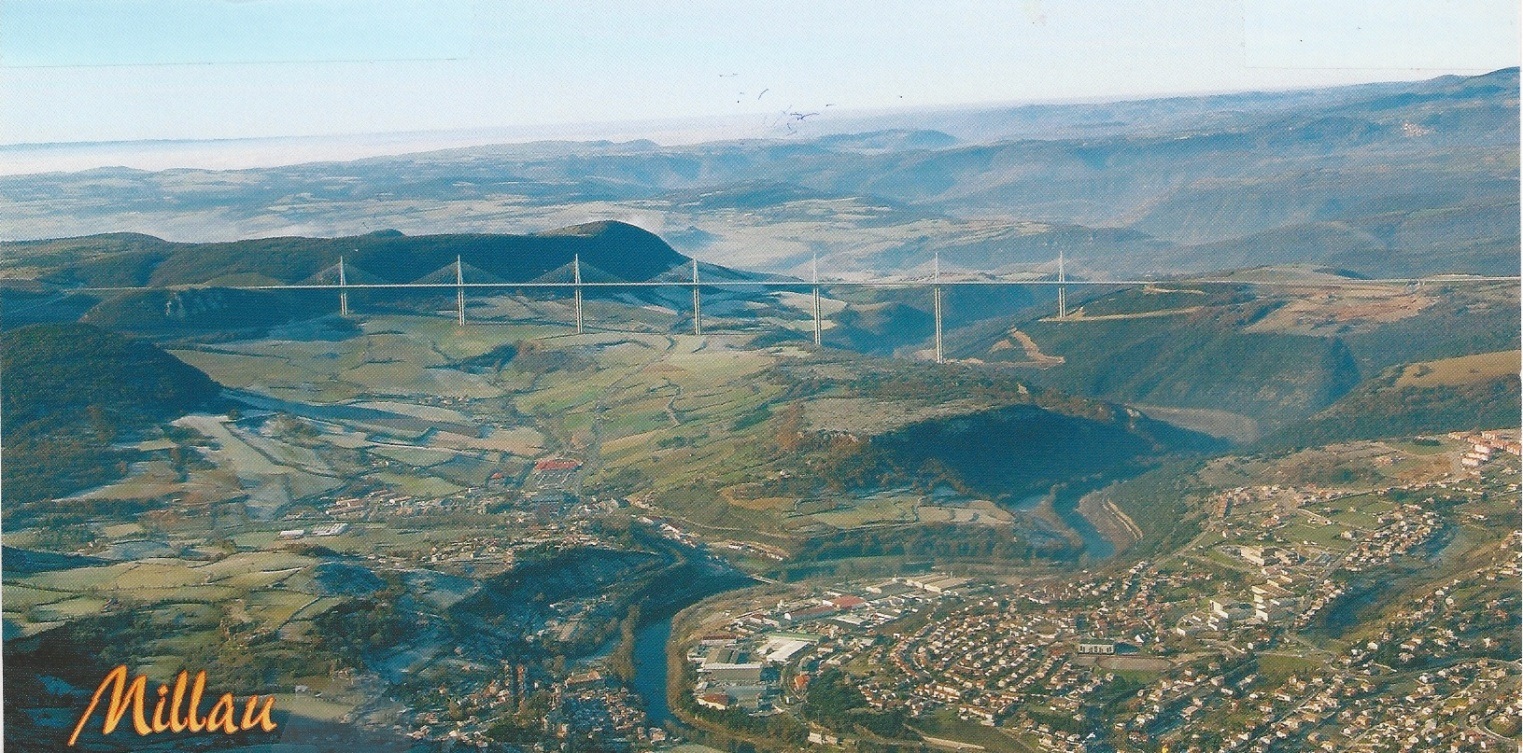
8-3-12

There was time left before our return flight from Barcelona and we decided to revisit a small, non-touristy town where we had stayed 12 years before. I reminded Mike of the excellent local wineries and he started packing.

After breakfast we headed off to the Grand Hotel Moderne Pigeon in Limoux, France. A good day for driving being slightly overcast with showers. We arrived at the hotel around 4 and got a lovely room (#6 ) over-looking the street.

The new owner-chef had remodeled and updated the wonderful old classic hotel. The original small parking area in back, off the formal dining room, had been converted to a garden-patio for both eating and drinking when the weather was agreeable. There was a lovely bar/coffee shop overlooking the front street. He had also added an elevator.

We reserved for the formal dinner at 8pm and set off for the central plaza and the old Church by the river Aude. This 10th century Church was small and simple but awe inspiring in its antiquity. There had been many “footsteps” here since the 10th century, but ours would be the last for that day…it closed at 6 PM.

We stopped in the main plaza for a glass of sparkling wine and people watching. The fountain in the center glimmered with the  shifting patterns of sunlight and the bubbly had the same affect on us. Not much had changed in our 12 year absence. Reminiscing was fun.

Our formal dinner began with candlelight and linens. The entree was lamb cassoulet at 48 Euros each. Mike talked the waiter into allowing us to share one order and suggested the price of the wine he was ordering would help compensate the price of a single dinner. The meal began with liver pate and crusty warm French bread: we rated it 4 stars.

8-4-12

After breakfast in the garden, we laid our plans for the day. Really just a single plan…wineries.

Sieur d’Arques, a well respected large co-operative was making wines under their own, and many other, labels. This area is noted for sparkling wine. They contend to predate the Champagne area in making “Sparklers” and more recently for reds. It does not matter to me…I have never met a bubbly that I didn‘t like.

Americans would recognize the name Gallo and one of the wines that they make for them is called “Red Bicyclette” (no translation necessary). They also make wines for, among others, Lafite-Rothschild. I am glad that we did not have to drive far after the tastings!

Dinner was a little lower key that evening. We found a restaurant nearby that served frog legs…something we rarely find in the U.S.

9/14/2012
Posted in France | Leave a comment

Still at the beginning

Still at the beginning….. May 5-7-12

A timely arrival in Atlanta for our international flight to Paris. The airport is huge with marvelous huge speed trains to zip you from one center to another. Time for a drink in the executive lounge. A lovely plane. First class seats, window and aisle, and impeccable service. I had a glass of champagne in the hand before sitting down.

After an early dinner, seats fully reclined and with pillows and blankets, we slept until 6 AM. Lights came on, breakfast served and we arrived at Paris De Gaulle airport at 7 AM. Huge airport and we got plenty of exercise running for luggage and the Paris shuttle to our hotel, K+K Hotel Cayre.

Since it was early and the hotel was not crowded, we checked into room 515, a small but nice room with a balcony, view and lovely bathroom. After a two hour nap we were on our way to the Luxembourg Garden. A huge area, beautiful day and a lively one: V.E. Day celebration (Victory in Europe). Americans more than welcome. We walked by busy tennis courts, horses for kids, joggers, strollers, picnics and very large fountain near Queen Mariadi Medici’s Palace. Lunch at an outside bistro and very pleasant listening to the music and singing of a parade nearby.

A Long nap at the hotel and off to dinner at La Fregrate by the river Seine with views of the Louvre and the evening lights beginning to glow. Ate excellent roast lamb and with good wine. Coffee outside on the veranda watching the pedestrian’s activities across the bridge around the Louvre.

Sunday 5-9-12

The hotel breakfast was 27E each (about 35.00 US) so to the Café Le Saint Germaine, right around the corner for a 9 Euro continental breakfast. We finished our coffee outside-watching. Lots of atmosphere on the corner of a main thoroughfare.

At 9:30 we walked to the Musee D‘orsy, a spectacular old railroad station… mentioned in SARAH‘S KEY as the site where hundreds of French Jews were stashed and eventually loaded onto trains for the concentration camps during World War II. The tracks were long gone but the original walls and skylights gave a sense of what it must have been like. You could hear echoes of the frightened and starving crowds being shoved onto the trains. The pervasive smell of evil will always permeate the atmosphere.

The sculptures and paintings in the Musee were magnificent. When we left at noon, there were hundreds of people lined up to enter. After coffee we crossed the Seine to the Louvre accompanied again with music and singing from the V.E. Celebration. What a glorious day.

Enthralled by Dan Brown’s book THE DE VINCI CODE and the subsequent movie, I stared at the glittering glass pyramid fronting the Louvre and envisioned Mary Magdalene‘s body buried there beneath the stars.  After lunch and a brief nap at the hotel, we crossed to the Left Bank to the 16 century Fountains of the Four Seasons that supplied water to the entire neighborhood. Nearby was the 11 century Abbey of St. Germain with much of the original building. Here were vocal and musical groups rehearsing for a Sunday evening Mass. It was hard to move on. Dinner was lott (monk fish) at a Bistro on the return to our hotel. Delicious.

Monday 5-10-12

Breakfast at our Bistro around the corner… this time with a wave and a smile from the cook. Mike located a 1920‘s apartment complex about a mile away where the buildings were covered with blue and white glazed ceramic tile. We walked around and behind—looking for shops or stores to see the inside— but the people living there knew what they had! We sat on a small bench in the square, shaded by several enormous trees, watching the sun ripple across the tiles. Then Mike walked me to the Bon Marche Shopping Center: a huge complex of attached older buildings where one could one could, “shop till you drop”. Beautiful.

Mike left to see the new Paris Bridge in Bercy: “Passarelle Simonde Beauvoir”, designed by the RFR Engineers. Our hotel had reserved an 8 o’clock dinner for us at La Fermeddu St. Simon restaurant and we had an exquisite dinner. We walked the two short blocks to our morning Bistro for coffee and wine, outside under the overhead, watching the Parisians running to and fro in the rain.

Posted in France | Leave a comment